

During the day, glucose fluctuates more due to food intake, cortisol, physical activity, and insulin sensitivity, as explained in How Diet Affects Blood Glucose Levels. Nighttime blood glucose patterns follow a different rhythm as food intake stops, hormone levels change, and the body enters a resting metabolic state.
After eating food, and within 30-60 minutes, there is a jump in glucose. The glucose peak is up to 60-90 minutes. Gradual decline towards a similar initial glucose value occurs after 2-3 hours.
What a “normal” night CGM profile looks like?
A typical nighttime glucose pattern, visible on CGM charts and explained in How to Read CGM Charts and Understand Blood Glucose Trends, is characterized by gradual glucose decline and reduced variability.
Night is the most sensitive period for glucose drop. This happens due to reduced adrenaline secretion, lack of food intake, and a decrease in hepatic glucose production.
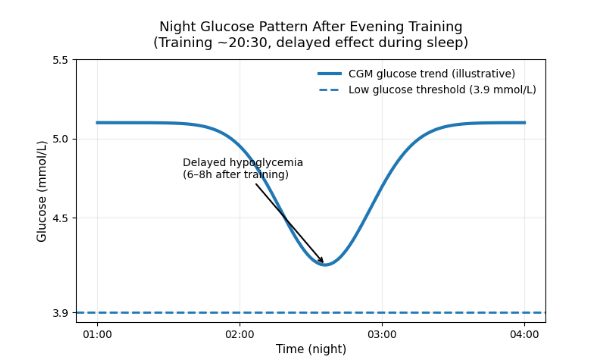
If the physical activity was 2 hours before going to bed, there is a prolonged effect of increased insulin sensitivity. This is described in detail in How Physical Activity Affects Blood Glucose Levels. The usual situation is that low episodes occur between 01:00 and 04:00 due to delayed hypoglycemia.
When muscles use all of their glycogen reserves, insulin sensitivity is increased for several hours. If we don’t have a meal (carbohydrates and proteins) after training, while glucose naturally decreases during the night, hypoglycemia occurs.
The time between 01:00 and 04:00 is the most critical. That is when the counterregulatory hormones (cortisol, glucagon) are the lowest. For that reason, the protection against glucose drop is weak. During the deepest phases of sleep (NREM), the body shows low metabolism, and the liver produces less glucose. The body in that phase does not actively defend against glycemia.
Note on data source:
This article is based on CGM data collected during a personal 15-day monitoring experiment.
👉 Next: Limitations and Insights from Personal Glucose Monitoring Experiments
The goal of this personal glucose monitoring experiment is to understand long-term trends rather than single values. For a complete overview, visit the CGM data–based educational series.