

In addition to diet, physical activity and blood glucose levels are closely linked, with glucose consumption depending on the type, intensity, and duration of exercise. This effect is described in the explained in guide on How Diet Affects Blood Glucose Levels.
During physical activity, muscles are activated, and they use glucose as a fuel. The intensity of glucose consumption during and after the activity also depends on when we had the last meal.
The Difference Between Aerobic and Anaerobic Exercise
Aerobic Activity and Blood Glucose Response
(walking, jogging, elliptical trainer)
Despite the expectation that a drop in glucose occurs during activity, this is not correct. Glucose remains stable due to two opposite processes. While the muscles consume glucose during activity, on the other hand, adrenaline stimulates the liver to release glucose into the blood. In this way, the glucose level during activity remains stable or even increases a little.
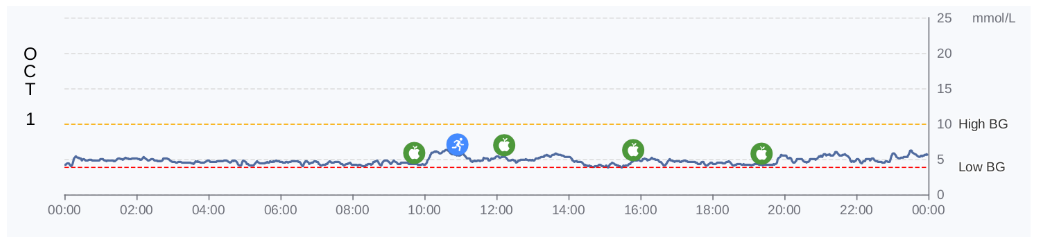
After the end of the physical activity, i.e., 5-15 minutes later, there is a sudden change. The muscles continue to use up glucose from the blood, while the stress hormone adrenaline decreases. It reduces the release of additional glucose. As a result, glucose starts to drop. To prevent a further drop in glucose values, taking a meal is necessary for stabilization. In practice, a gradual total stabilization of blood glucose occurs within 1-2 hours.
In a situation where, after physical activity, glucose suddenly starts to fall below the minimum values, hypoglycemia (<3.0 mmol/L) occurs. It is described in text Blood Glucose Levels Explained: What They Are, Normal Values, and How They’re Measured. It occurs with symptoms such as tremors or fainting. People who are prone to hypoglycemia should take a small meal with carbohydrates and protein. Carbohydrates quickly raise glucose, while proteins maintain values by slowing down and stabilizing glucose for the next 2-3 hours. Examples of such meals are: toast and peanut butter, Greek yogurt and fruit, and toast and cottage cheese.
Anaerobic Activity and Glucose Spikes
(HIIT, sprinting, heavy weightlifting)
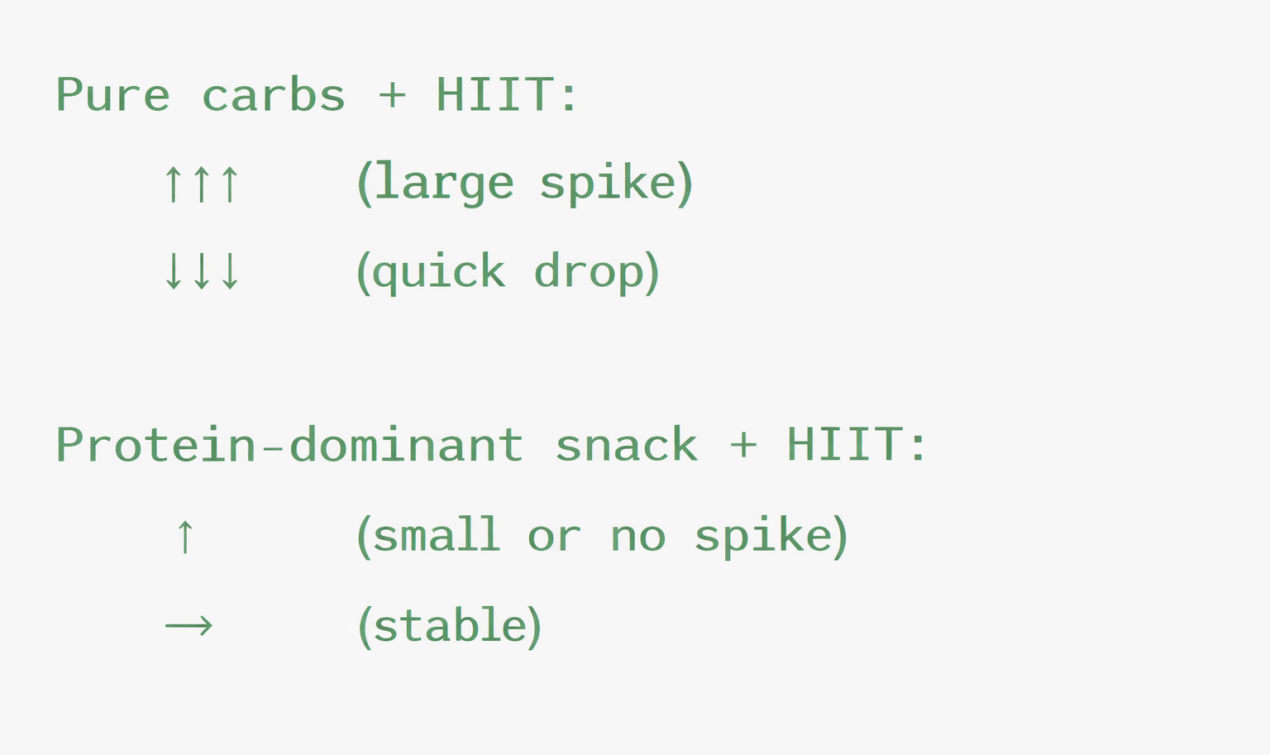
A typical effect of anaerobic activity is that it leads to a spike in glucose. This happens due to stress hormones (adrenaline, cortisol) and increased effort.
After this type of physical activity, there may be a short increase, while after 30 minutes and up to 2 hours, there is a stabilization or a decrease.
The literature recommends a meal 30 minutes to 1 hour before anaerobic activity to moderate the hormonal response. An example of a snack is: boiled eggs with crackers, Greek yogurt, and a couple of walnuts, an apple, and a scoop of peanut butter. These types of meals, in addition to slowing down the emptying of the stomach, also reduce the adrenaline rush.
Before the activity, avoid consuming carbohydrates, sugar, energy drinks, or large meals. These types of meals increase glucose and insulin secretion, and then comes adrenaline-releasing activity. While insulin tries to lower glucose, adrenaline forces the liver to push it out even more. The result is higher and steeper spikes on the CGM sensor and more unstable curves. After training, there is a higher risk of reactive hypoglycemia.
Long physical activity and Glucose Stability
(longer exercices, >90 minutes)
The effect of a longer run of 90 minutes or other physical activity is a significant and prolonged drop in glucose values.
During activity, the muscles use up all the glycogen from their own supply, and the body starts with the maximum consumption of glucose in the blood. The liver releases glucose to compensate for all this.
After training and up to 1 hour, stress hormones decrease, and the liver throws out less glucose. The muscles still take glucose from the body. In that situation, there is a drop in glucose that lasts for hours. Increased insulin sensitivity is present because GLUT-4 transporters remain active for hours. In that situation, the body removes glucose from the blood too quickly.
Days with longer physical activity are associated with glucose that remains low for hours even after the end of physical activity.
In situations of constant glucose drop, people with high insulin sensitivity, low MBG, late-night or long activity without carbohydrates are most at risk.
Note on data source:
This article is based on CGM data collected during a personal 15-day monitoring experiment.
👉 Next: Nighttime Blood Glucose Patterns and Delayed Hypoglycemia Explained
The goal of this personal glucose monitoring experiment is to understand long-term trends rather than single values. For a complete overview, visit the CGM data–based educational series.