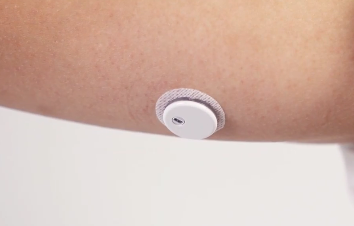

How CGM Sensors Measure Glucose in the Body
This section explains how CGM sensor technology work by measuring glucose in the interstitial fluid using enzyme-based electrochemical reactions.
CGM works on the principle of continuous measurement of the glucose in the interstitial fluid (the fluid between the cells in the skin).
CGM uses a small sensor that is put on the skin, most often on the abdomen or the back of the upper arm. On top of the sensor is an electrochemical electrode that reacts with glucose in the interstitial fluid.
Technology Behind CGM Sensors: Enzymes, Electrodes, and Data Transmission
Most commercial CGM sensor technology use the enzyme glucose oxidase, which catalyzes (accelerates the chemical reaction) the oxidation of glucose in the intercellular fluid or blood.
The CGM electrode consists of three main components:
- Working electrode – measures the glucose-related signal
- Reference electrode – maintains a stable electrical potential
- Auxiliary electrode – completes the electrical circuit
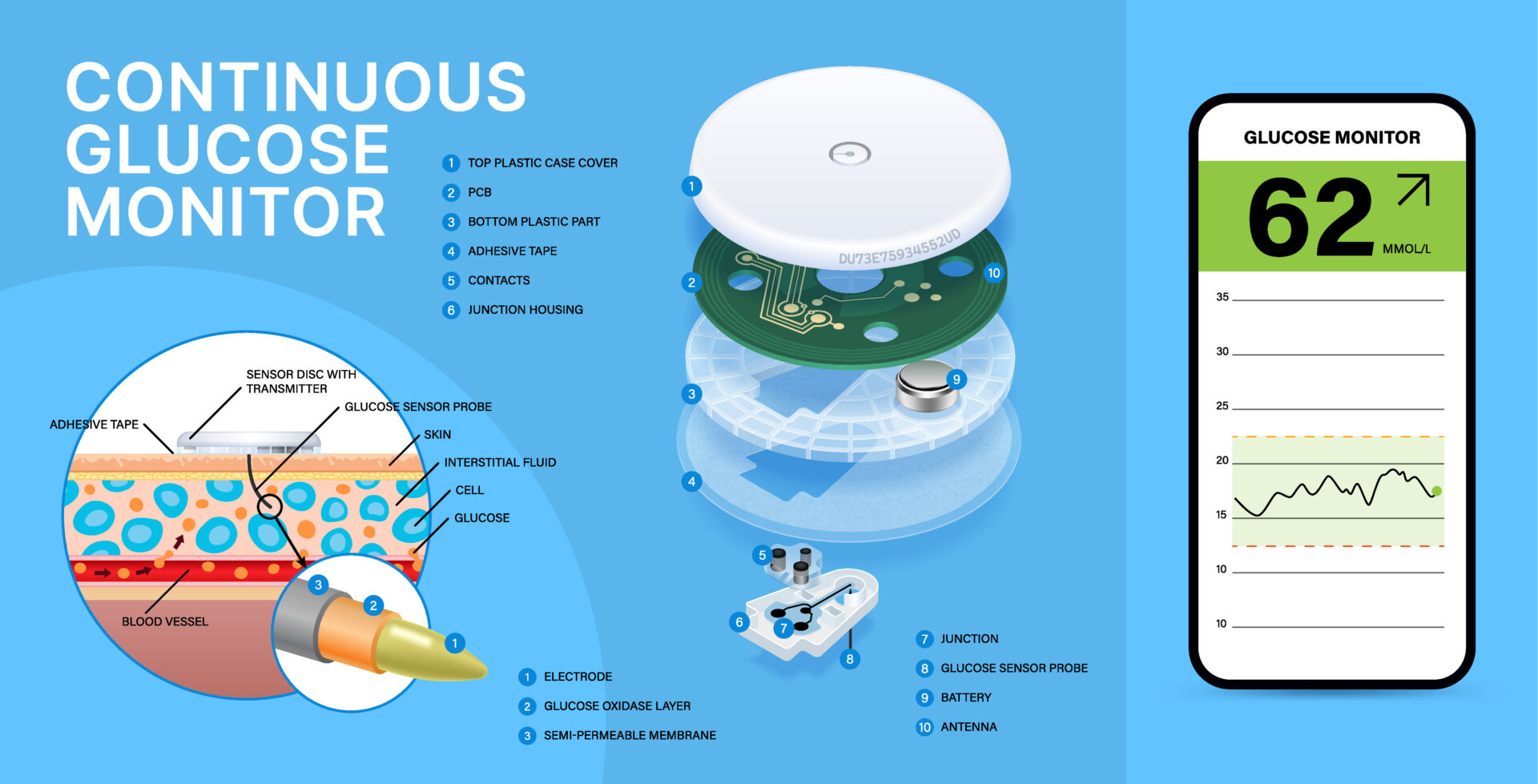
The device’s sensor usually consists of an extremely thin needle or filament that is placed in the subcutaneous tissue (interstitial fluid) where it measures the glucose level. The surface of the electrode is covered with a membrane. The membrane controls the passage of glucose and oxygen and prevents the interference of other molecules.
After the sensor measures the electrical signal, the electronics in the device convert it into digital form, which later allows users to understand how to read CGM charts and understand glucose trends. The sensor wirelessly transmits the data via Bluetooth to a phone app, smartwatch, or receiver.The software then processes the data and converts it into a graph of glucose movements throughout the day. The software warns of hypoglycemia/hyperglycemia and enables the sharing of application accounts (data) with another person.
Why CGM Sensors Have a Limited Wear Time
CGM sensors typically last around 15 days. Several biological and technical factors limit their wear time:
- Foreign body reaction
As the sensor is under the skin, it represents a foreign body. Over time, micro-inflammation occurs and the formation of a thin capsule of fibrous tissue around the sensor. This reduces the accuracy of the measurement as the glucose gets harder to reach the sensor electrodes.
- Battery limitations
Due to the limited life of the batteries in the device, the battery lasts up to 15 days. Outside that frame, the battery stops working, and the device can no longer send data.
- Enzyme degradation
Chemical degradation of the sensor enzyme occurs over time.
- Skin and adhesive reactions
Prolonged stay of the sensor in the subcutaneous tissue increases the risk of bacterial infection, irritation, or allergic reaction to the glue. There are cases of an allergic reaction to the adhesive tape that is used to attach the sensor device.
- Regulatory approval limits
Finally, all CGM sensor technology go through clinical trials to obtain approval (e.g., FDA, CE) for a specified duration of operation. Long-term use of this type of sensor may compromise accuracy and safety.
Advantages of CGM Sensor Technology
Advantages of continuous glucose monitoring (CGM) sensors are:
- Easy application of CGM sensors
- Newer sensor technology that supports an active lifestyle
- Easily track and share data with others via the app
- Fewer punctures and greater comfort because the sensor is placed only once every 15 days
- Continuous monitoring of glucose (graphic display of glucose level, numerical display, ambulatory profile, etc.)
- A better assessment of the fluctuation of glucose values during the day
- Early detection of hypoglycemia and hyperglycemia
Limitations of CGM Sensor Technology
Limitations of Continuous Glucose Monitoring (CGM) Sensors:
- The cost of a CGM sensor is higher than that of a glucometer.
- Measurement delay compared to laboratory measurements. Blood from a vein directly shows current glucose values. Sensors measure glucose in interstitial fluid with a 5–15 minute delay. This mostly applies to values during sudden changes, such as physical activity or after a meal.
- Older sensors (e.g., Guardian) require calibration of the device by entering values from a glucometer or from a laboratory analysis. Newer generation devices are factory-calibrated.
- Limited sensor lifetime (15 days)
- Some people are bothered by wearing sensors on their bodies and constant monitoring.
- In cases of severe dehydration, the glucose reaction is delayed, or it can show incorrect values. This happens because the person has less fluid in the bloodstream and in the intercellular space. The flow becomes weaker as the glucose reaches the sensor slowly. The advice is to maintain normal hydration of the body. It is also advisable to check the glucose level on the glucometer in situations when the values from the sensor do not match the actual symptoms.
👉 Next: How to Read CGM Charts and Understand Blood Glucose Trends?
The goal of this personal glucose monitoring experiment is to understand long-term trends rather than single values. For a complete overview, visit the CGM data–based educational series.