
As the capital of Slovenia, Ljubljana represents a combination of history, culture, nature, and a modern city atmosphere. The city lies on the river Ljubljanica, along which stretches the promenade and active city life. It is characteristic of Ljubljana that the center is mostly closed to cars. This makes the city ideal for walking or riding a bike.
A special style was given to Ljubljana by the Slovenian architect Joze Plocnik. His influence can be seen from Tromostovje to parks and various institutions. Ljubljana is also known for its very good ecological approach. This city is the green capital of Europe. Besides Ljubljana, Slovenia is known for its beautiful Alpine landscapes and Lake Bled. Whether you are a fan of art, sights, parks, or mountains, you will surely like Slovenia.
In the following, I will guide you through a four-day stay in Ljubljana and provide tips for visiting natural attractions.
Ljubljana City Center Tour
We arrived in Ljubljana in the morning, so we had a lot of time before going to our accommodation. We decided to visit the city center a little.
It is practical when the bus and train stations are in one place. However, we were surprised when we saw that the building of the main bus station resembled a larger kiosk. You can only buy tickets in cash. Another option is to purchase tickets online through the Ljubljana Bus Station website. As the buses only accept physical tickets, it is necessary to print them after you have received the online tickets by email.
You can get physical tickets by going to the counter of the main bus station. There you can print the tickets for free. You need to tell them the order number, or go to the photocopier. It is important to emphasize that when buying a bus ticket for a specific day, you have the right to ride any bus that goes to that particular location. Purchasing a ticket does not guarantee that you will have a place to sit on the bus. As we came in the part of the season where there are not many tourists, there was not much of a crowd on the transport.
City Promenade
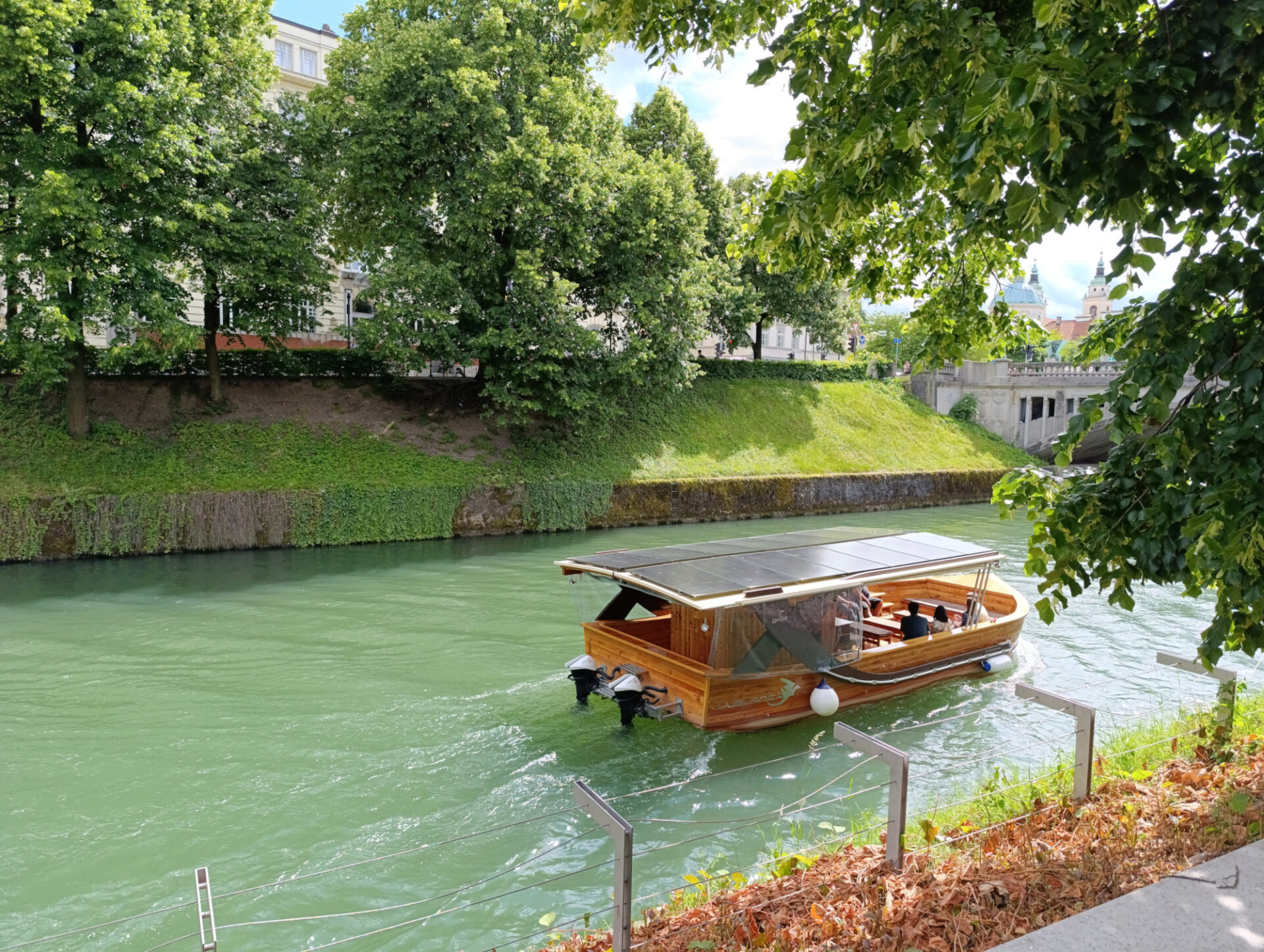
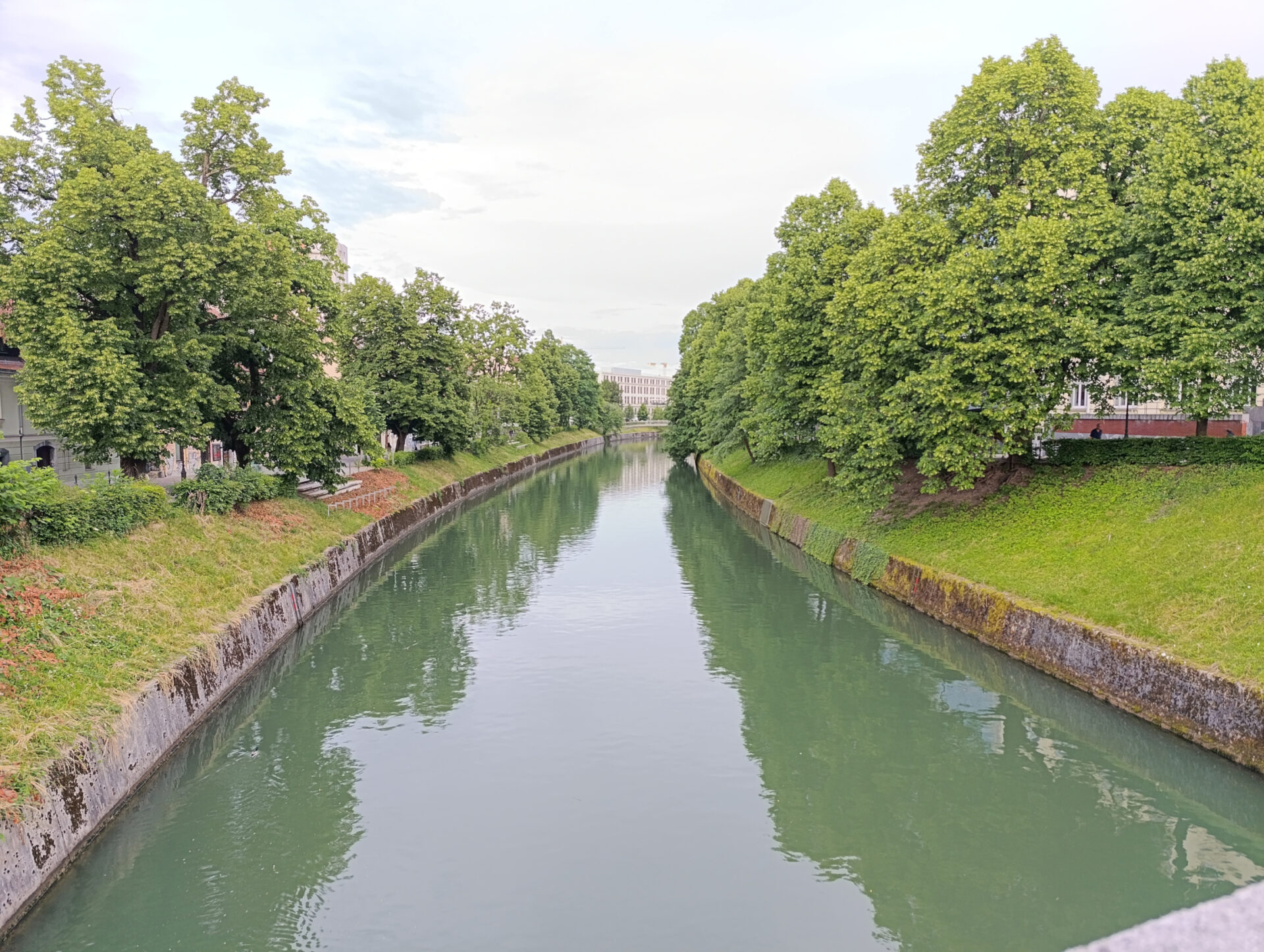
As I mentioned before, Ljubljana is almost an ideal city for visiting, without using a car or bus. City promenade stretches along the Ljubljanica River. There are many cafes and restaurants, as well as places where you can buy souvenirs.
Prices in cafes and restaurants in the center of Ljubljana are fair, and as in all cities, you can also find expensive restaurants.
For all the days we spent in Ljubljana, we got the impression that everything is relatively close and easier to walk because the terrain is flat.
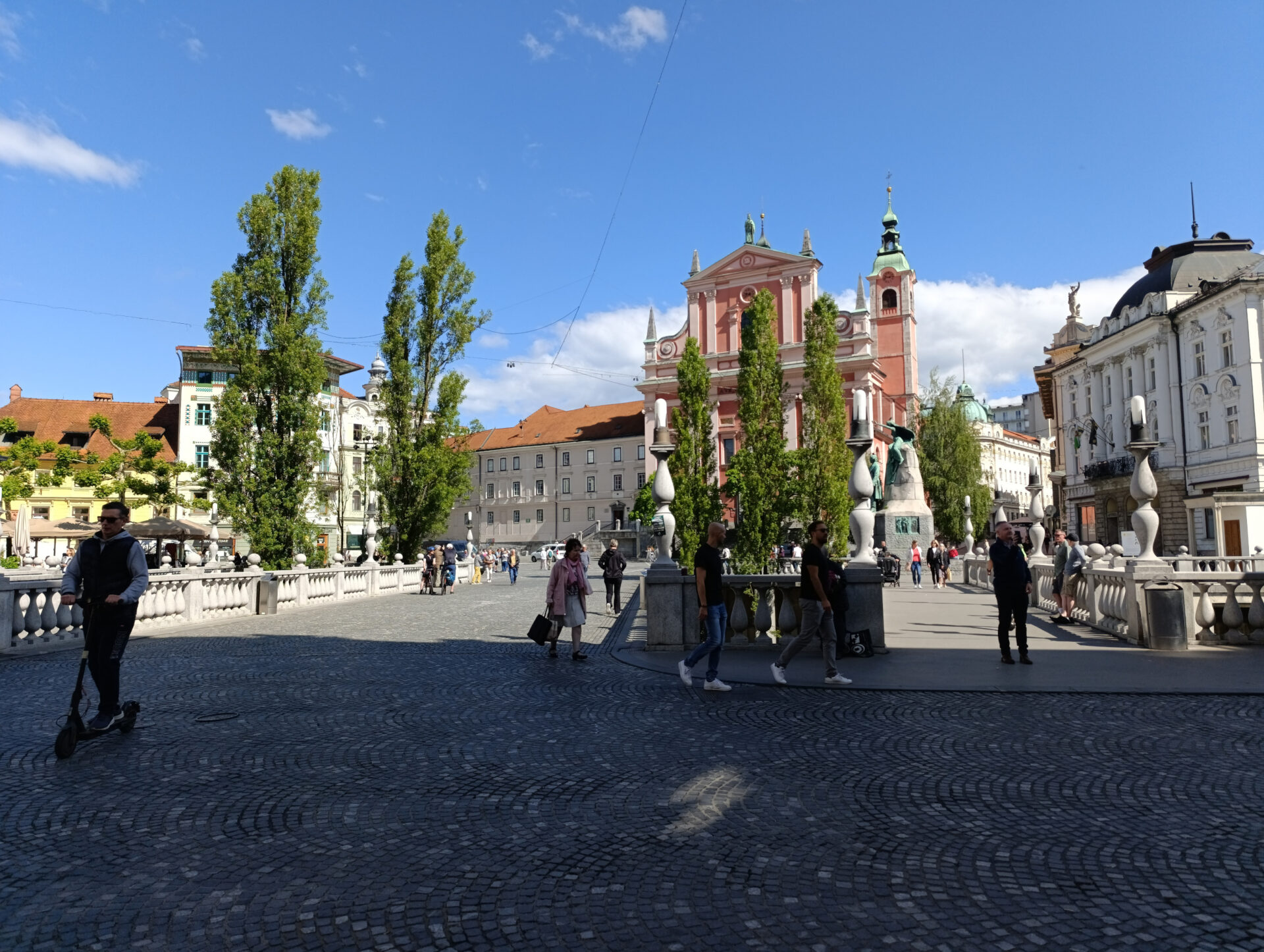
An interesting attraction in the center is Tromostovje. This architectural representation is a combination of a modern and an old bridge. In addition, Prešeren Square serves as a popular gathering place and a central hub for both tourists and locals. However, although there are no benches along the Ljubljanica, there are still several places where visitors can sit and find shelter from the strong sun. We immediately caught our eye at the restaurant Moji štruklji with strudels, which sounded delicious.
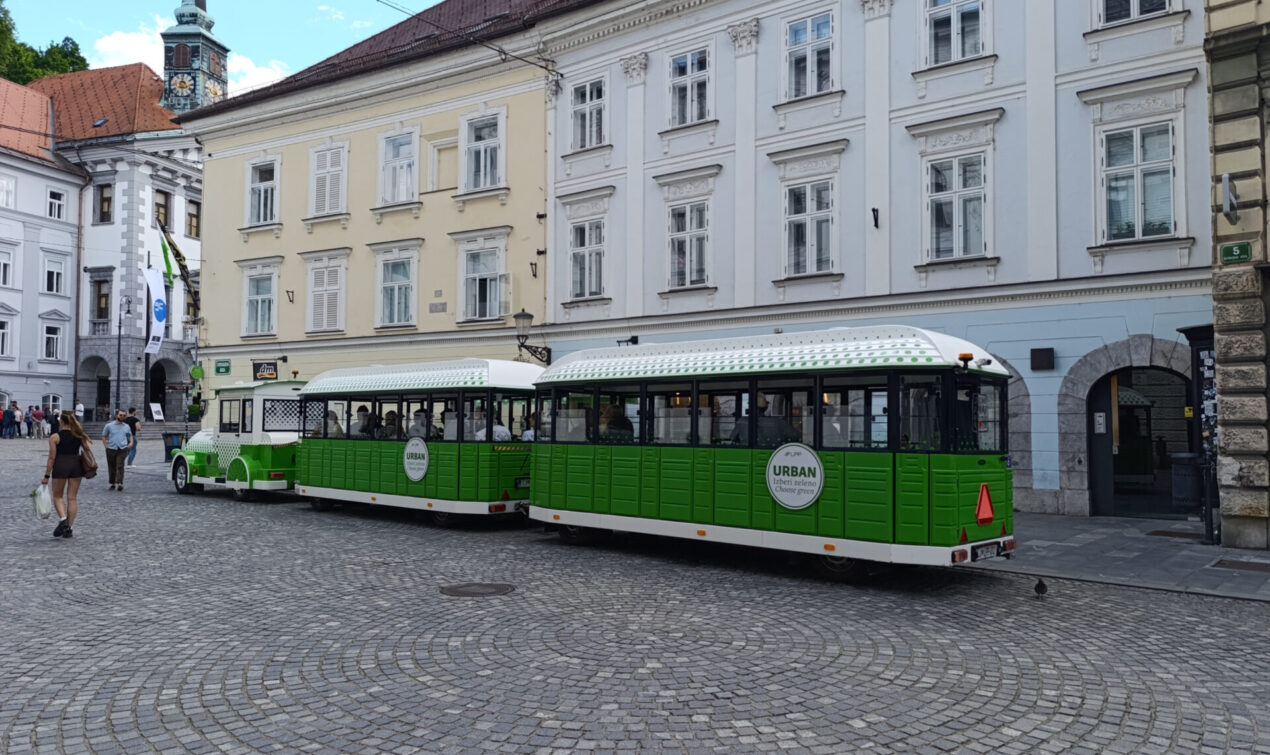
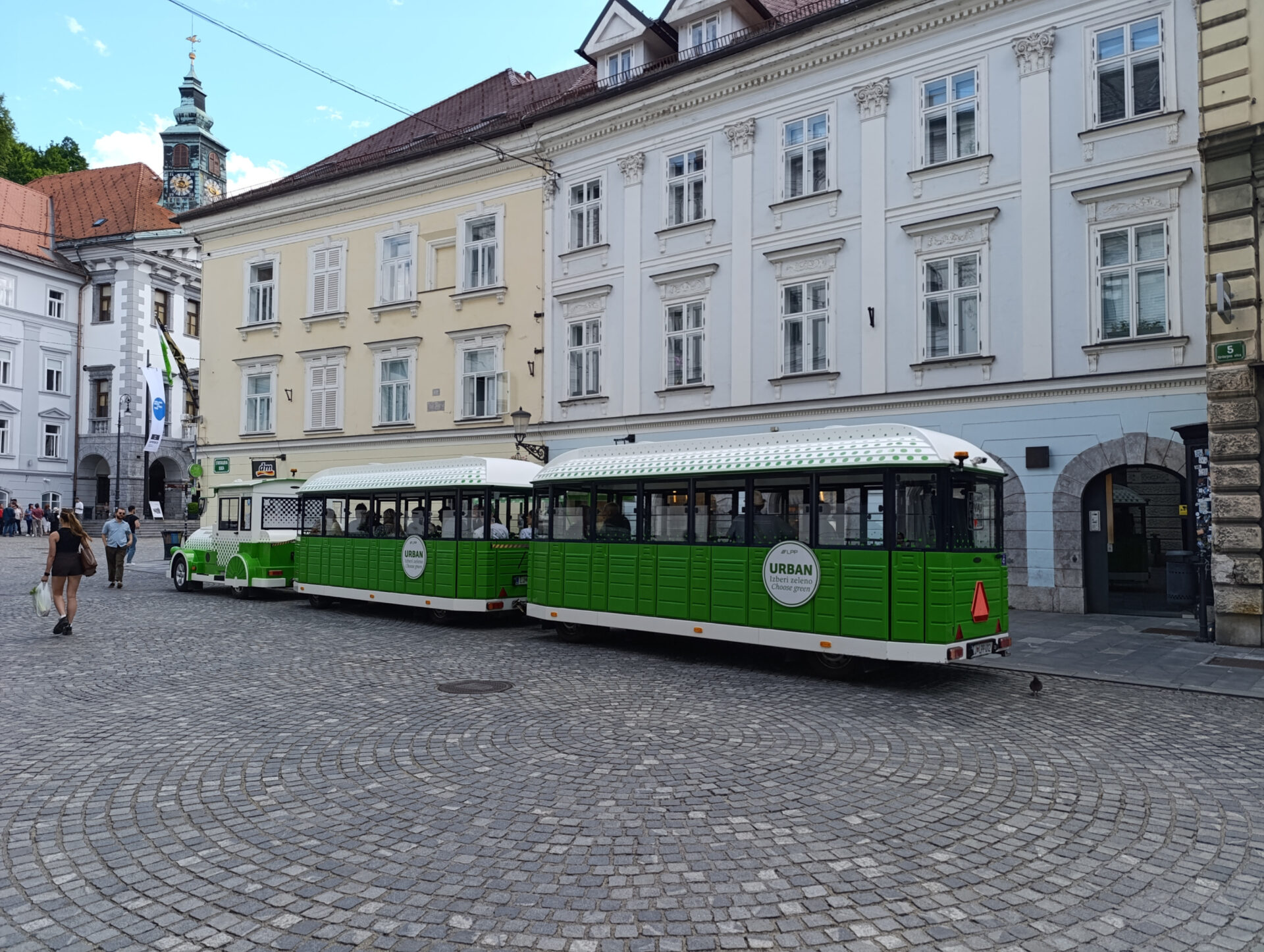
Another popular attraction is a ride on tourist boats or the eco Urban train. Because there are many options available, visitors should therefore choose wisely.
Ljubljana Castle
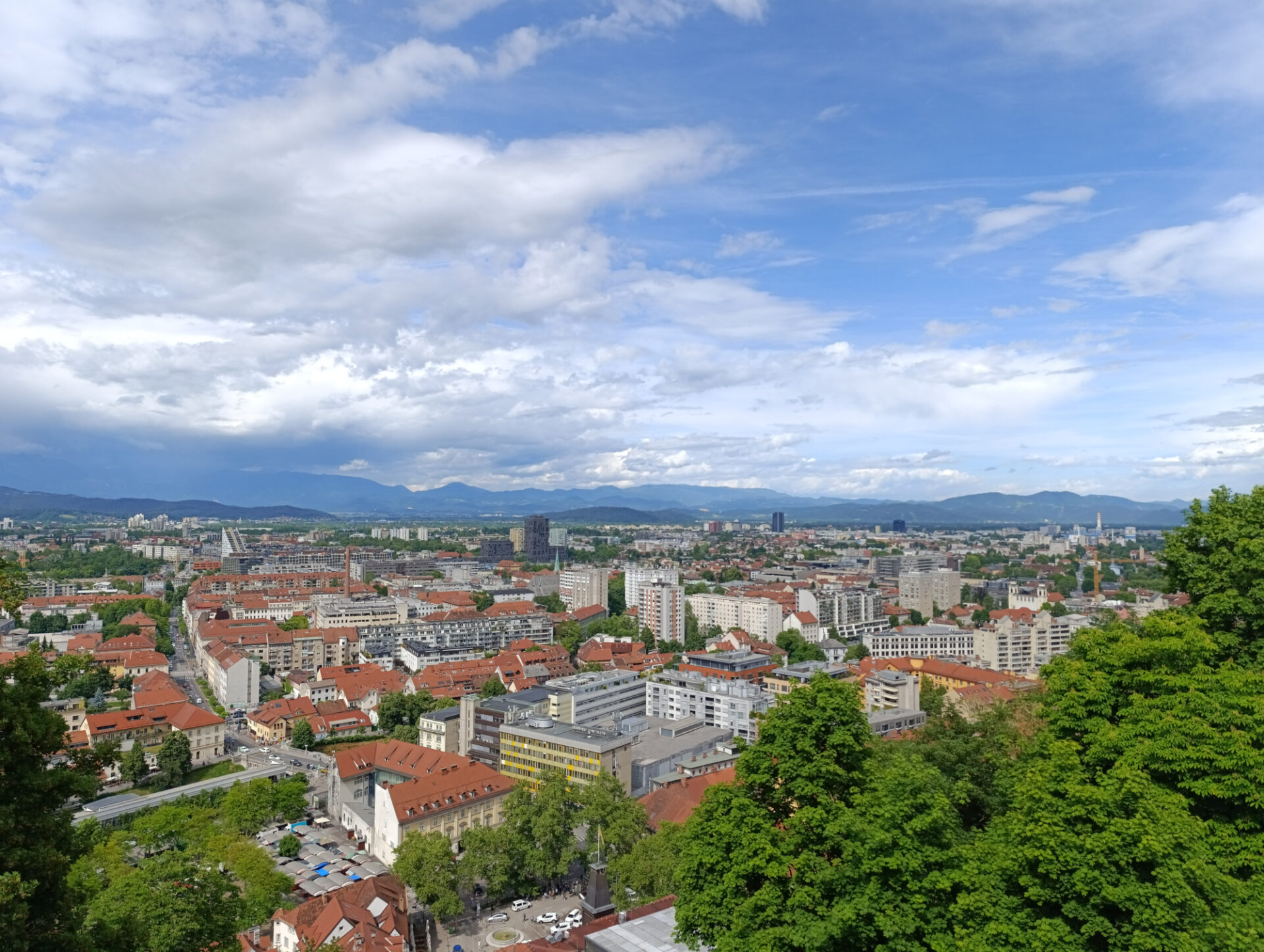
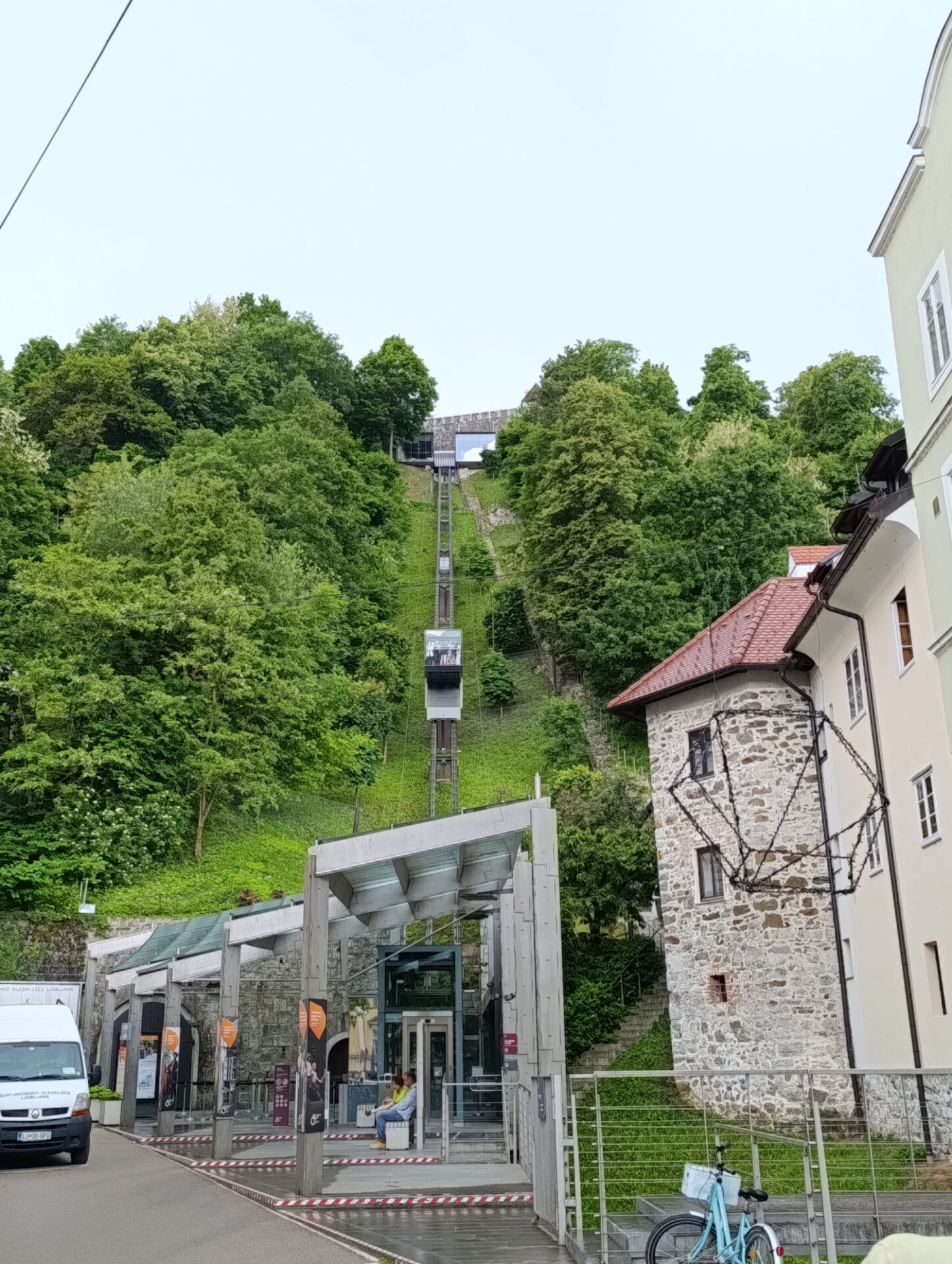
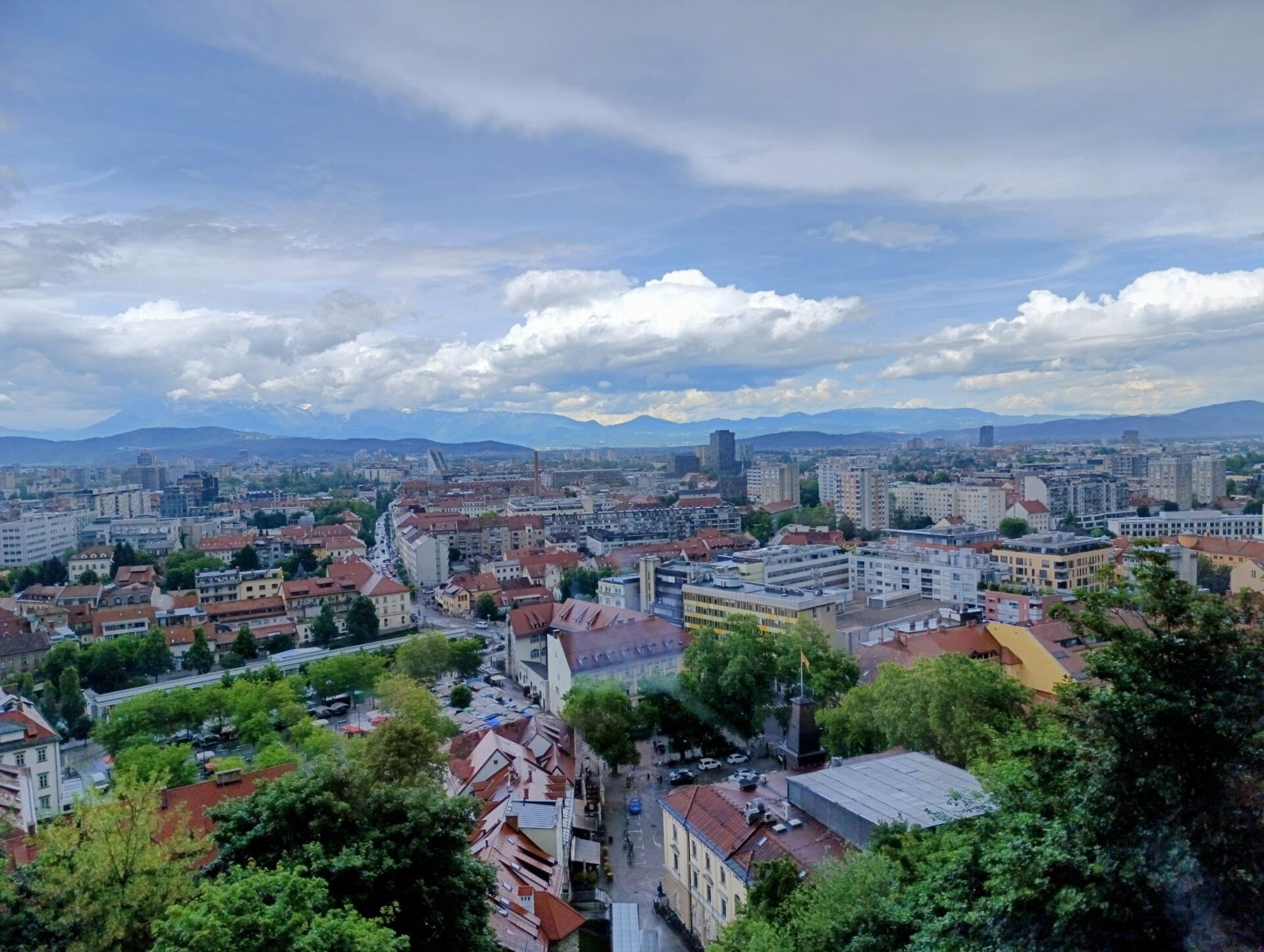
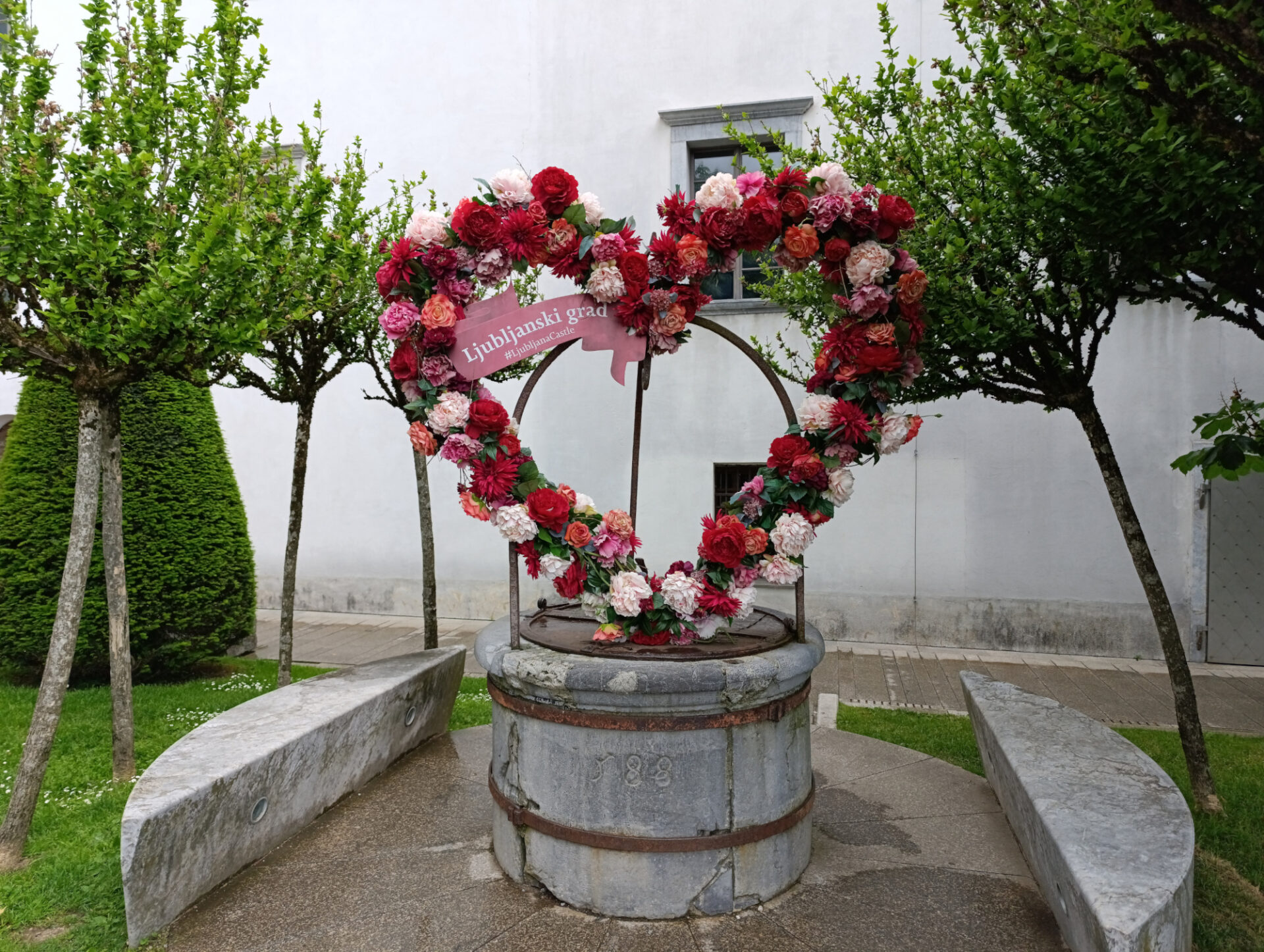
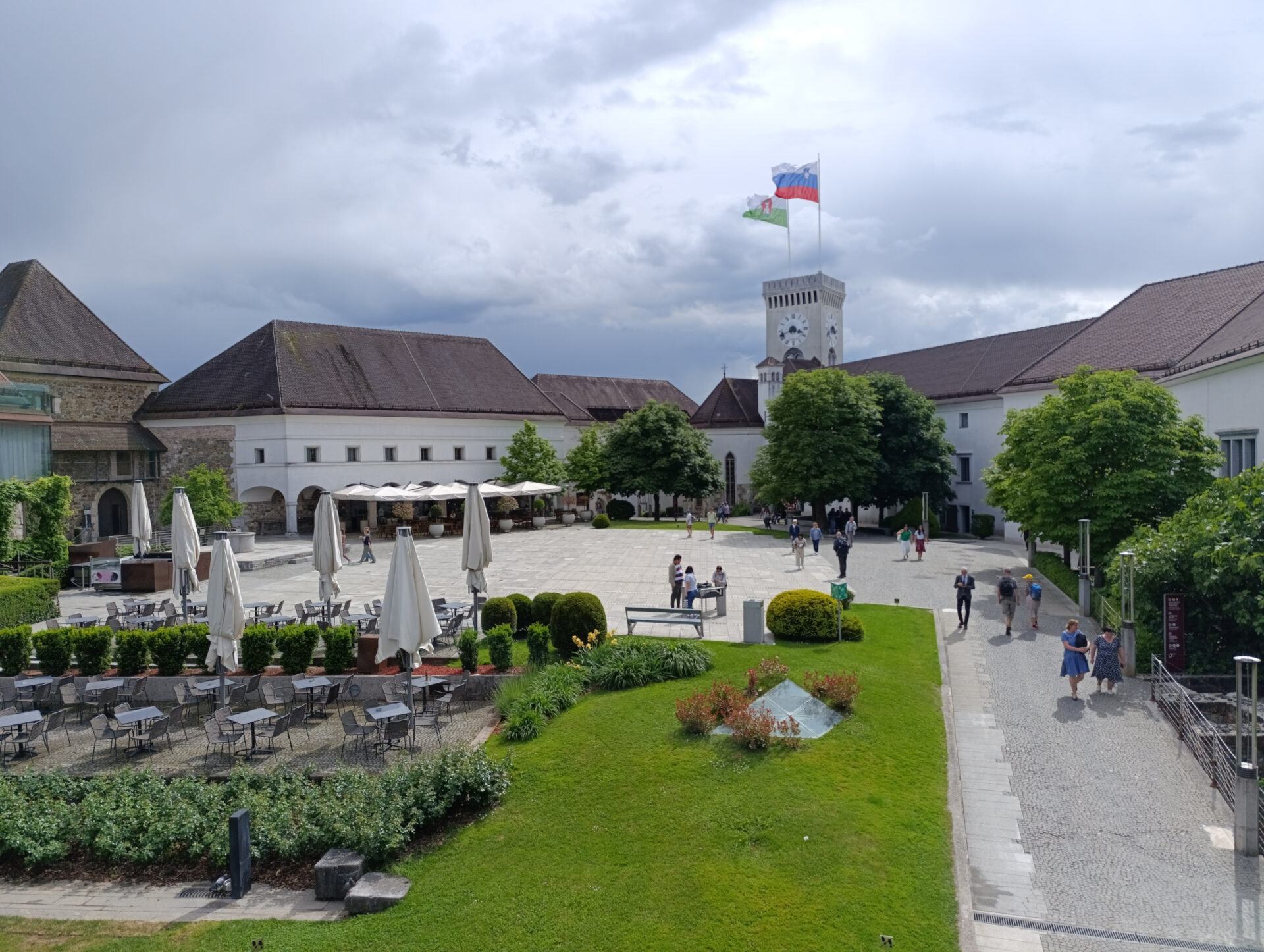
In the afternoon, we visited the Ljubljana Castle, a fortress on a hill in the center of the city. You can reach the castle by foot, bus, or gondola. The gondola ride is more interesting. With a few minutes of driving, you have a view of the panorama of the city. The gondola ride is included in the price of the ticket for visiting the Ljubljana Castle. A castle ticket can be purchased through the website.
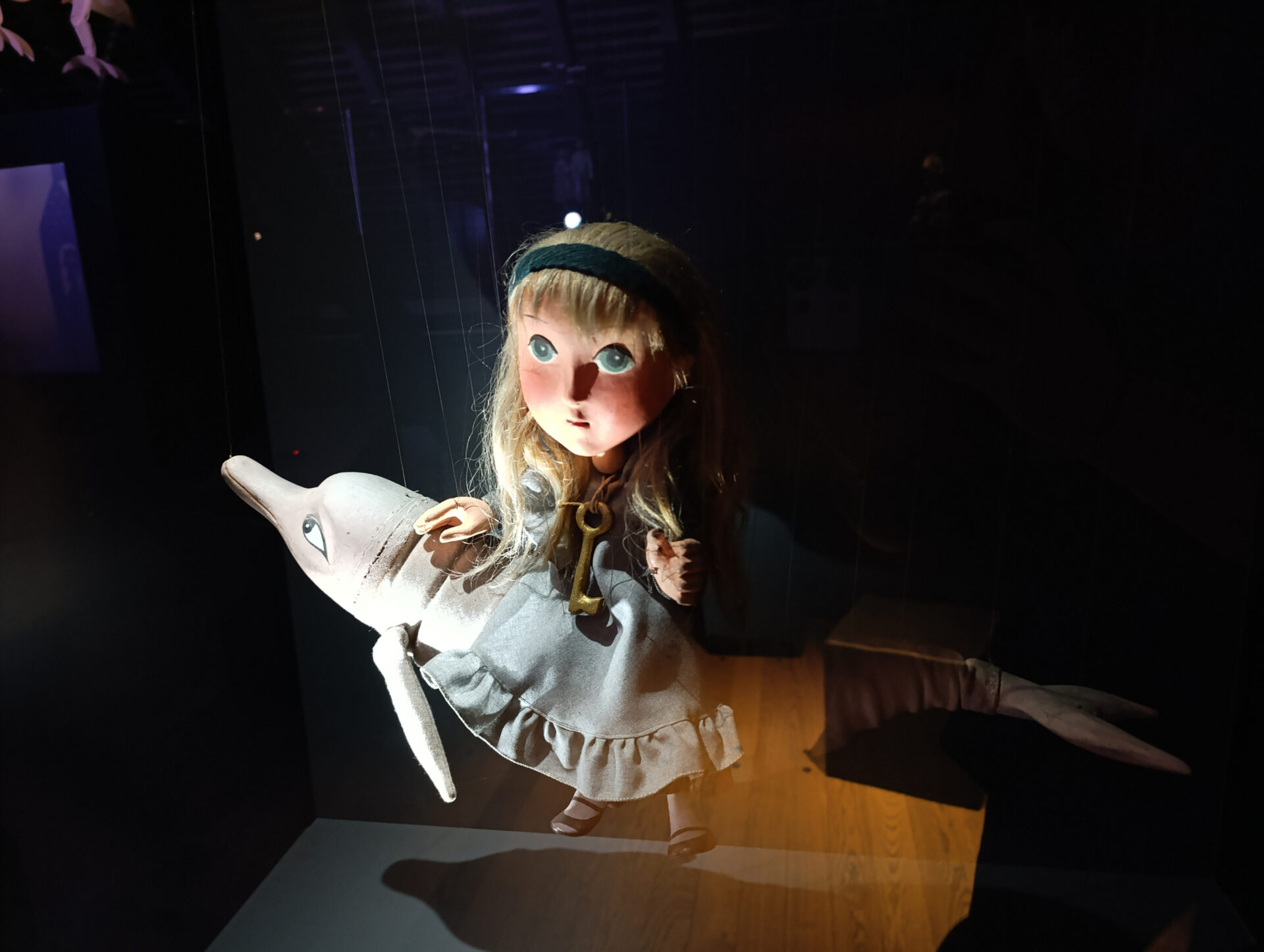
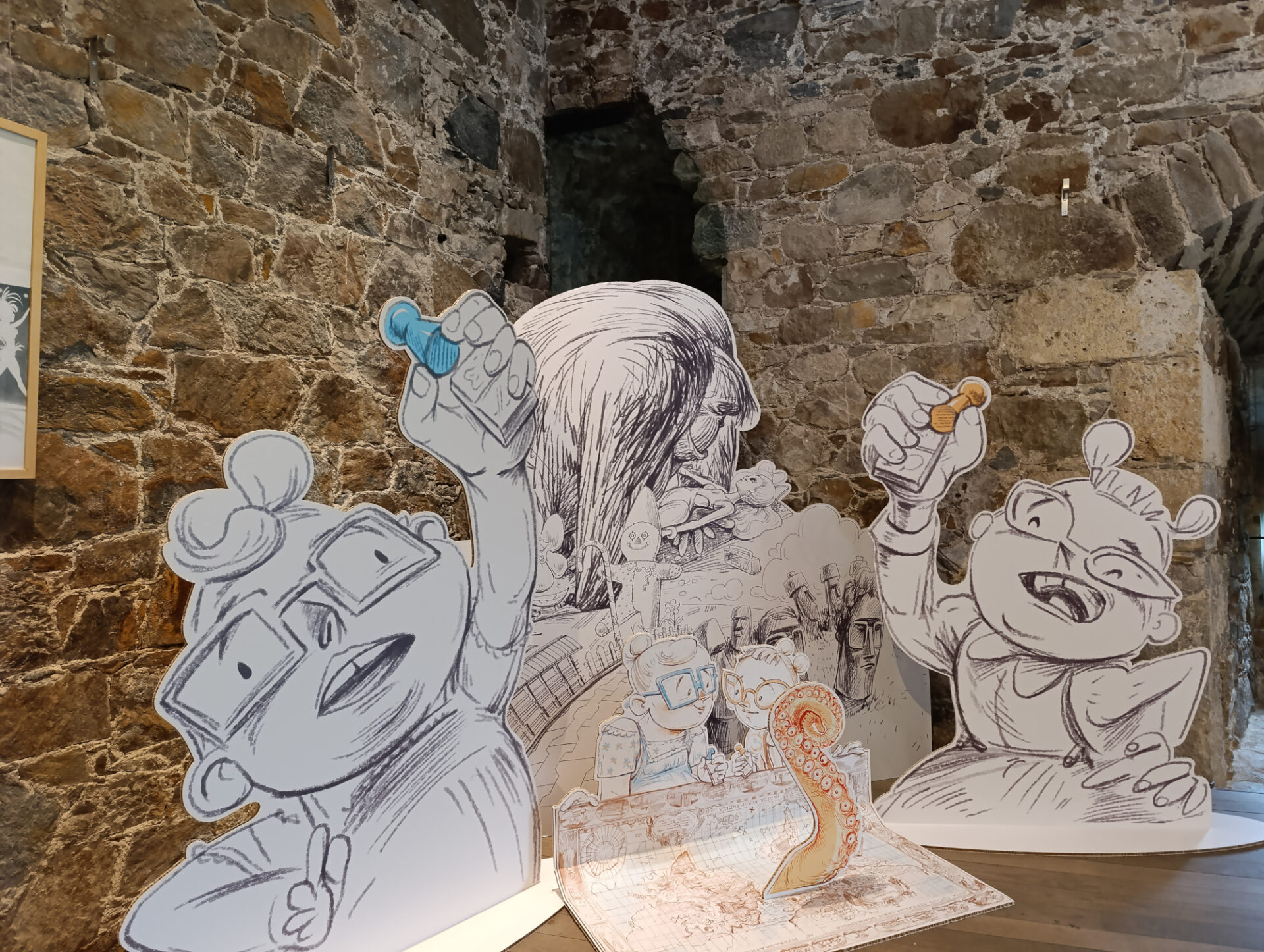
With a castle ticket, you can also visit the puppet museum and the exhibition. We spent about 45 minutes seeing everything.
Urbana Transport Card
In the center, you can find stations with bicycles and tricycles with machines for rent. If you’re going to a place outside the center, you can use a taxi or a bus. You need a tourist Urbana card to ride the transport. You can buy an Urbana card at a machine located at many stations or the main bus station. There is available a tourist ticket for 24 hours, 48 hours, or 72 hours. In addition to purchasing a bus ticket, you get other discounts and free visits. You can check all information and ticket prices on the Visit Ljubljana website. By installing the Urbana card application, you can more easily determine which transportation you need. You can track the live location of the transportation, find parking lots, rent bicycles, and many other useful things. Additionally, and most importantly, you can easily top up the credit online that you will use to validate tickets in transport. You can also transfer your physical Urbana card to the application.
Lake Bled
One of the most visited places is Lake Bled, which is located an hour and a half away by bus from Ljubljana. As a tourist, you can go to many places from Ljubljana by bus. Ticket prices are affordable and the connections are good. You can go to Bled by car, train, or bus.
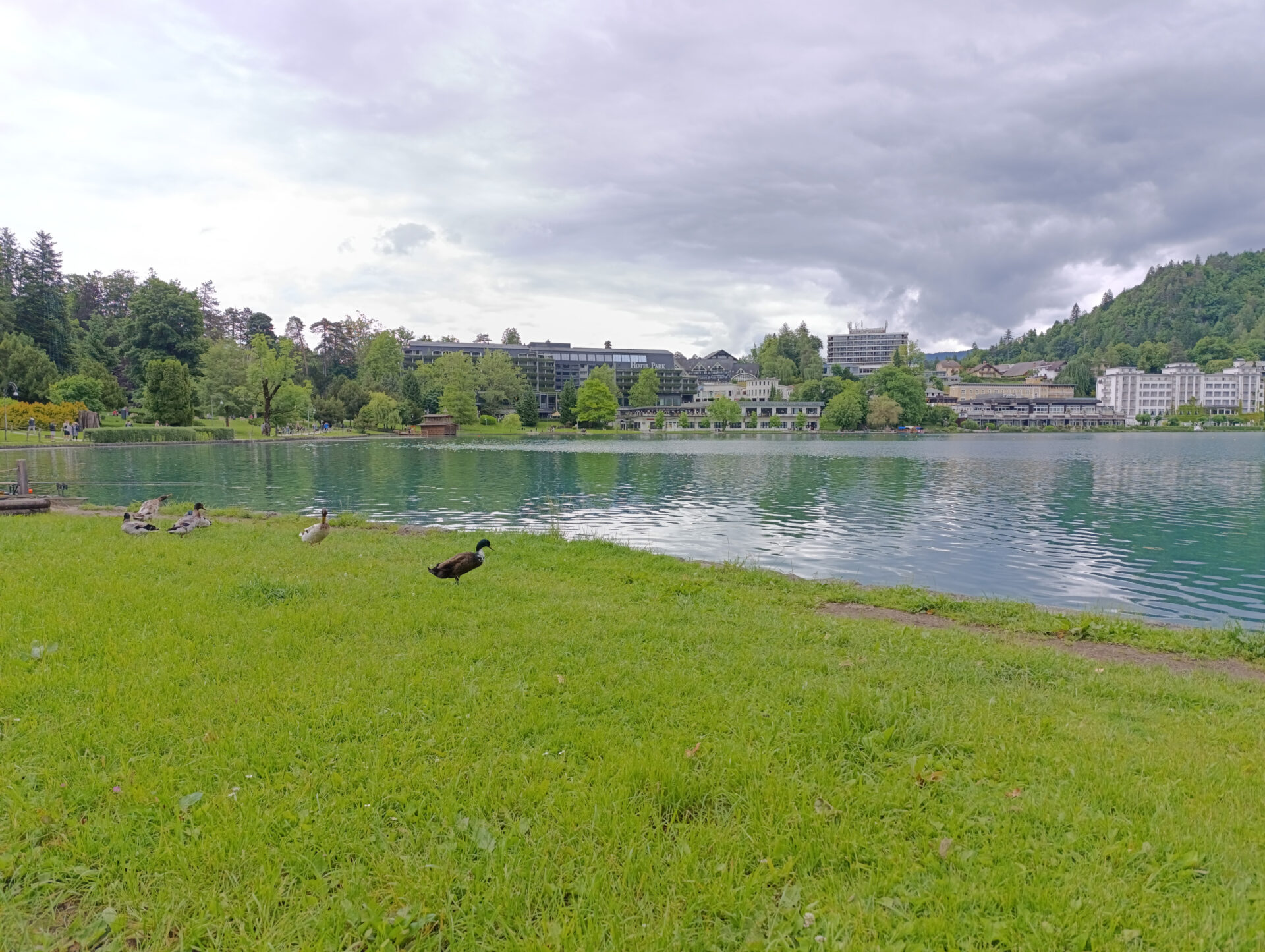
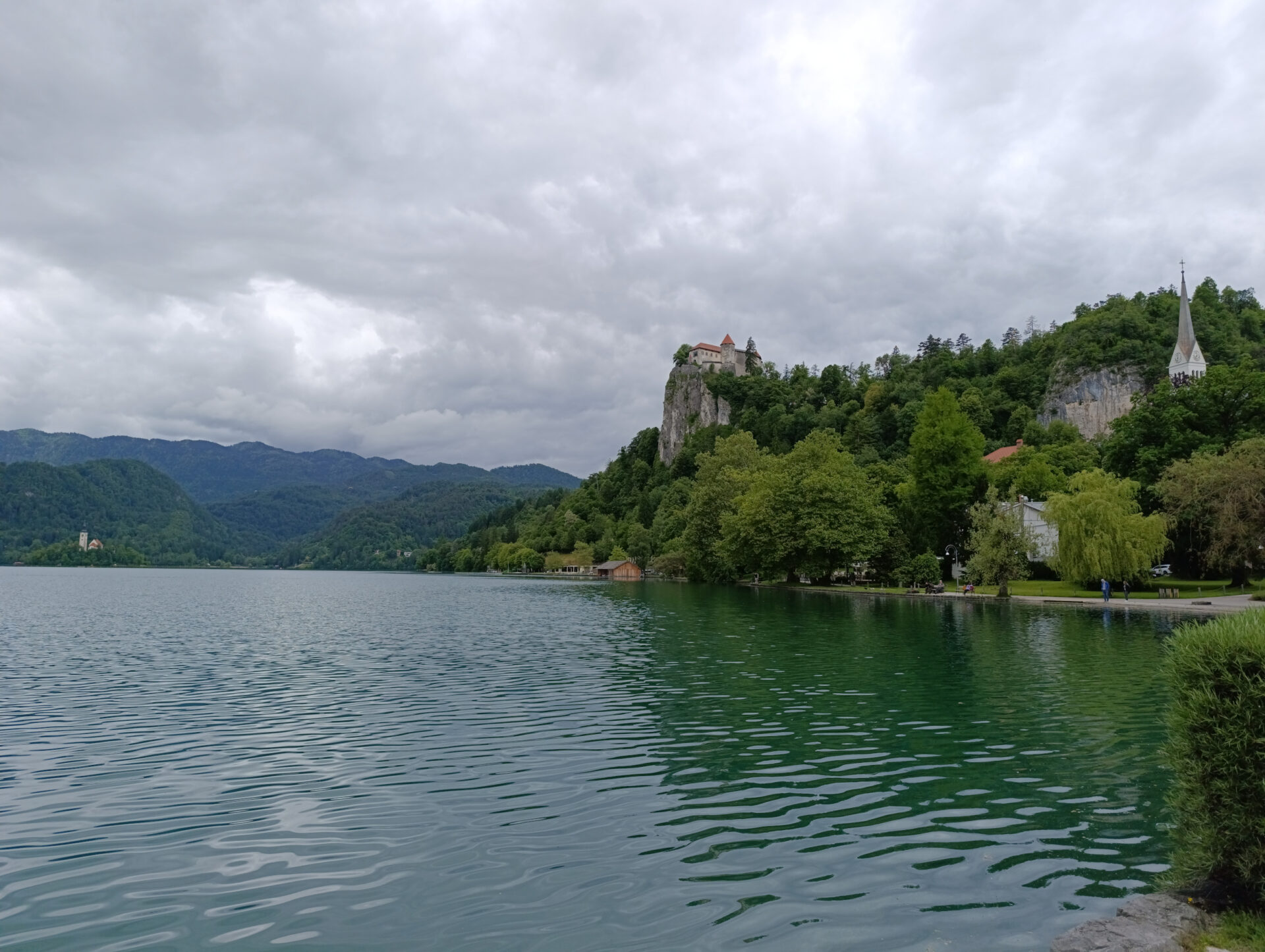
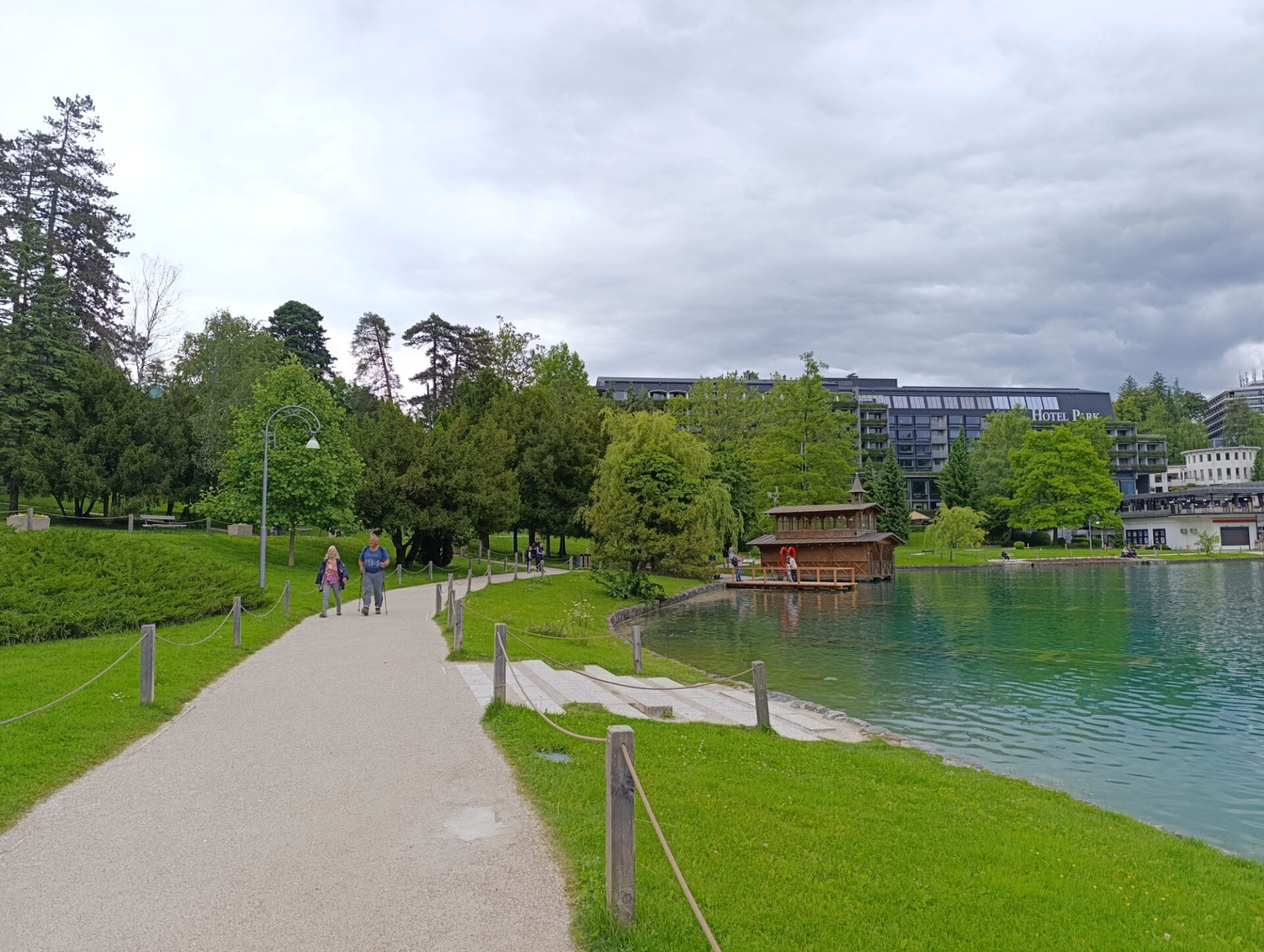
The Lake Bled circle is about 6 km long. It can be crossed by walking or by car. However, it is enough to take a walk in the very center of Lake Bled. At the beginning of the lake, there are cafes where you can rest and try Ljubljana krempita.
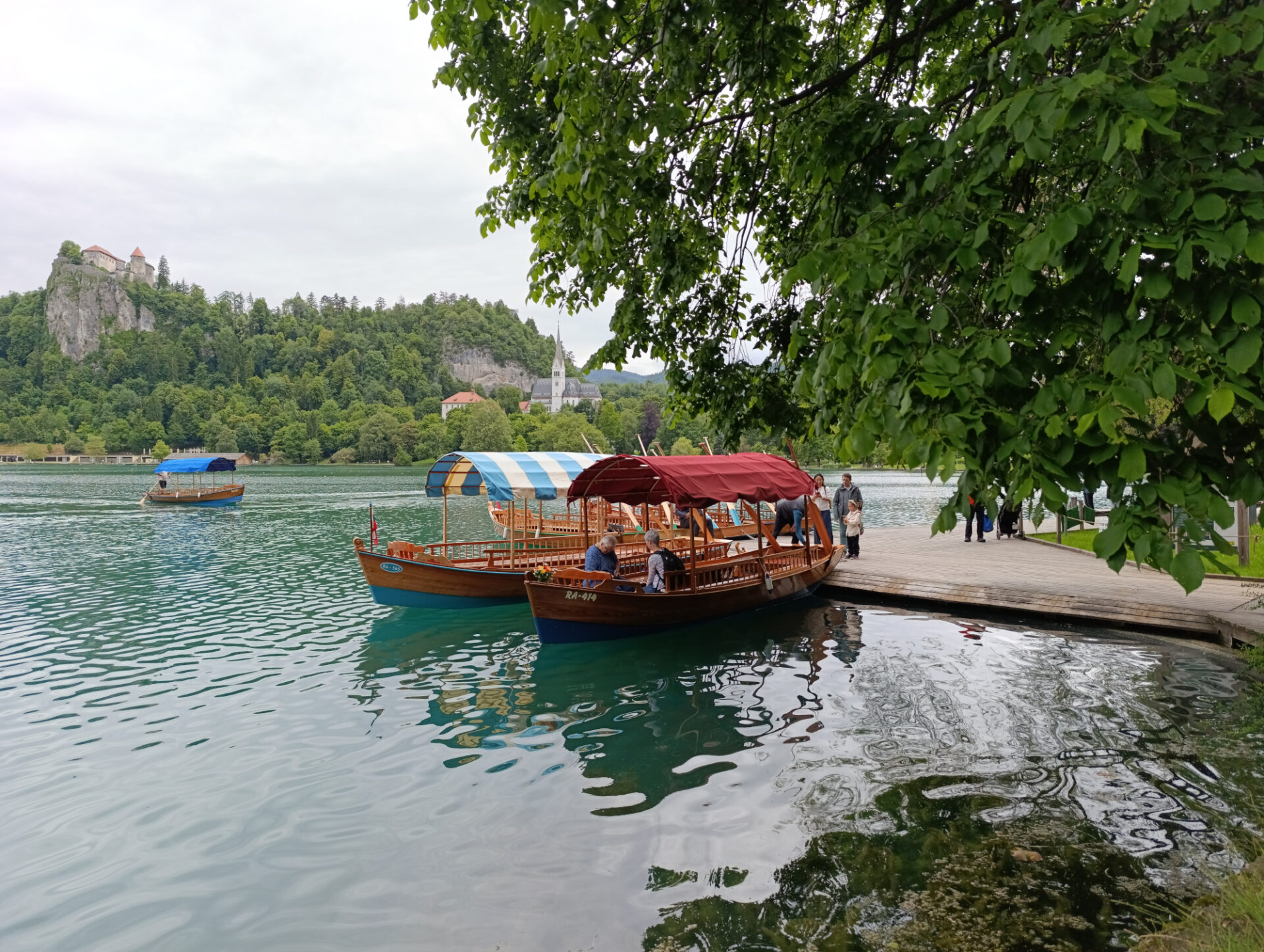
There is also the option of a boat ride that takes you below Bled Castle.
Bled Castle is located on a hill and also offers a good view of the lake. However, since the price is higher, and you will only visit castle terrace, we decided not to go there. After walking along the lake and taking photos, we rested at the Vergano 1882 cafe.
Lake Bled is good if you want to rest and spend the morning in nature.
Vintgar Sotjeska
For the afternoon, we planned a visit to Vintgar Sotjeska. Tickets for the visit can be purchased at the main bus station in Bled, or via the website. By purchasing a ticket before leaving for Vintgar, you have the right to ride the shuttle to the entrance. The ride takes about 15 minutes and departs from the main bus station in Bled. There is a shuttle timetable on the internet. It is recommended that you ask before, by calling, or when you arrive in Bled in the morning. When buying tickets, you indicate the time of entry to Vintgar and the time range you can enter. However, as we were late due to the shuttle transport, it was still possible to enter after the reserved time on the website. If you don’t come by car, another option is a taxi, which costs around 20 euros.
If you go by car, you can check the options for three parking lots on the website. The shuttles depart from each parking lot to the entrance to Vintgar.
Vintgar Sotjeska Entrance
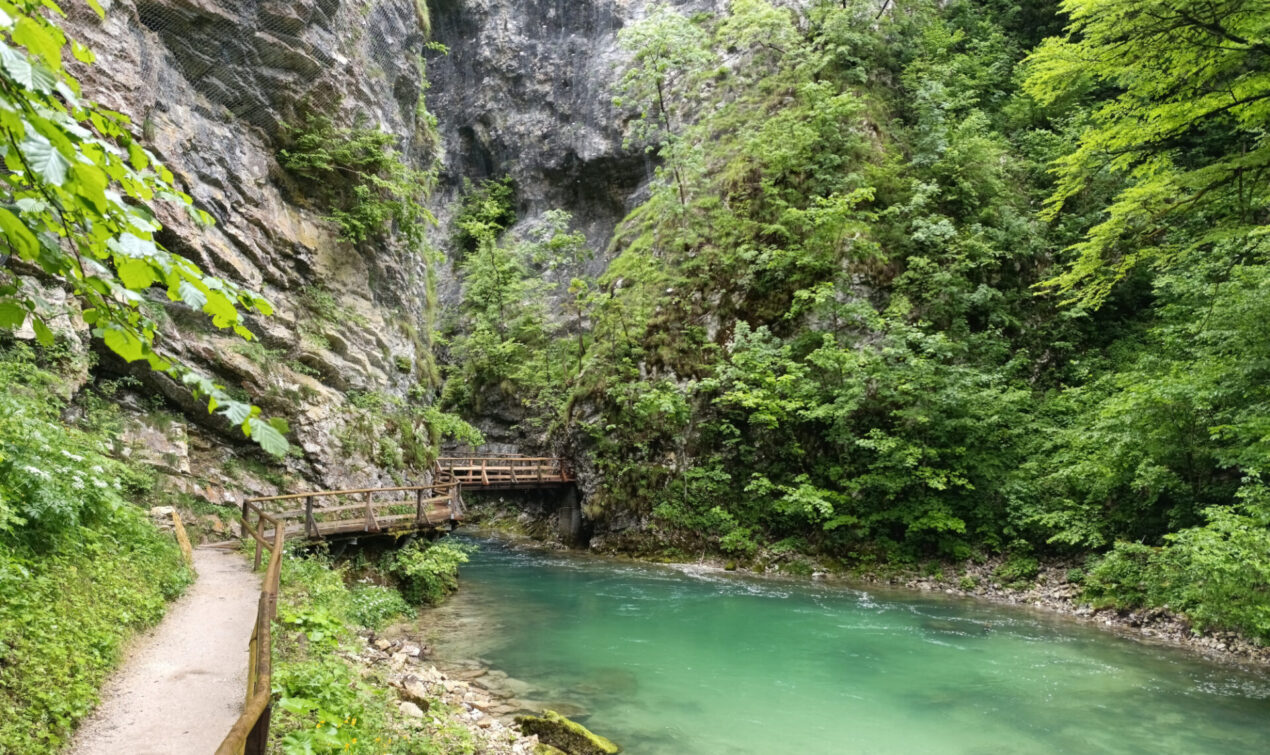
After the Vintgar Sotjeska entrance gate, you are given a helmet. You need to wear a helmet during your whole visit. The canyon is nicely arranged, and the roads are partly made of wood and dirt. The length of the canyon visit is about 1.6 km. This canyon can be easily visited on foot because the terrain is flat with a few really gentle hills. We went through everything in 50 minutes with one break. In the first half of the track, there are two benches for a break.
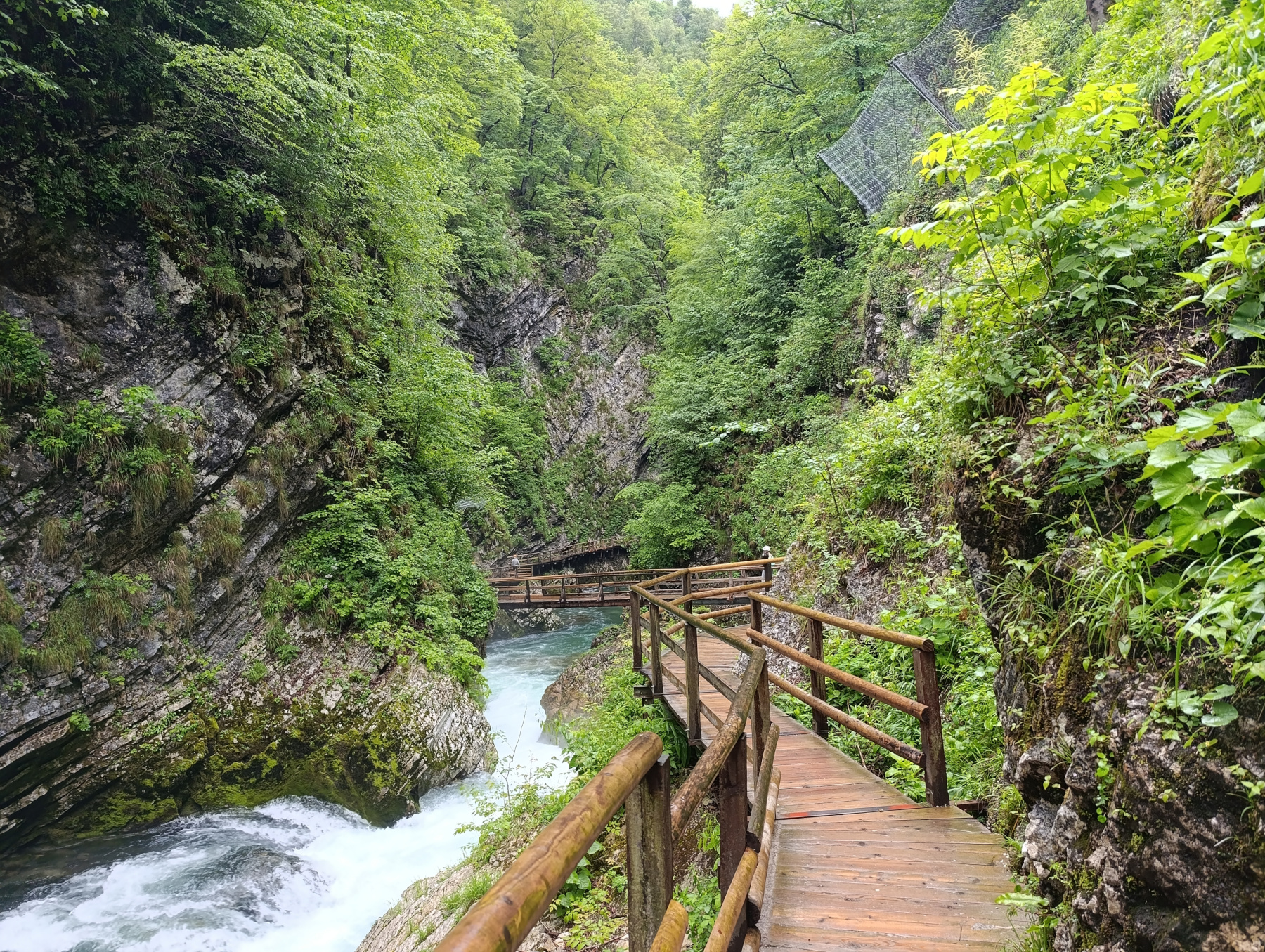
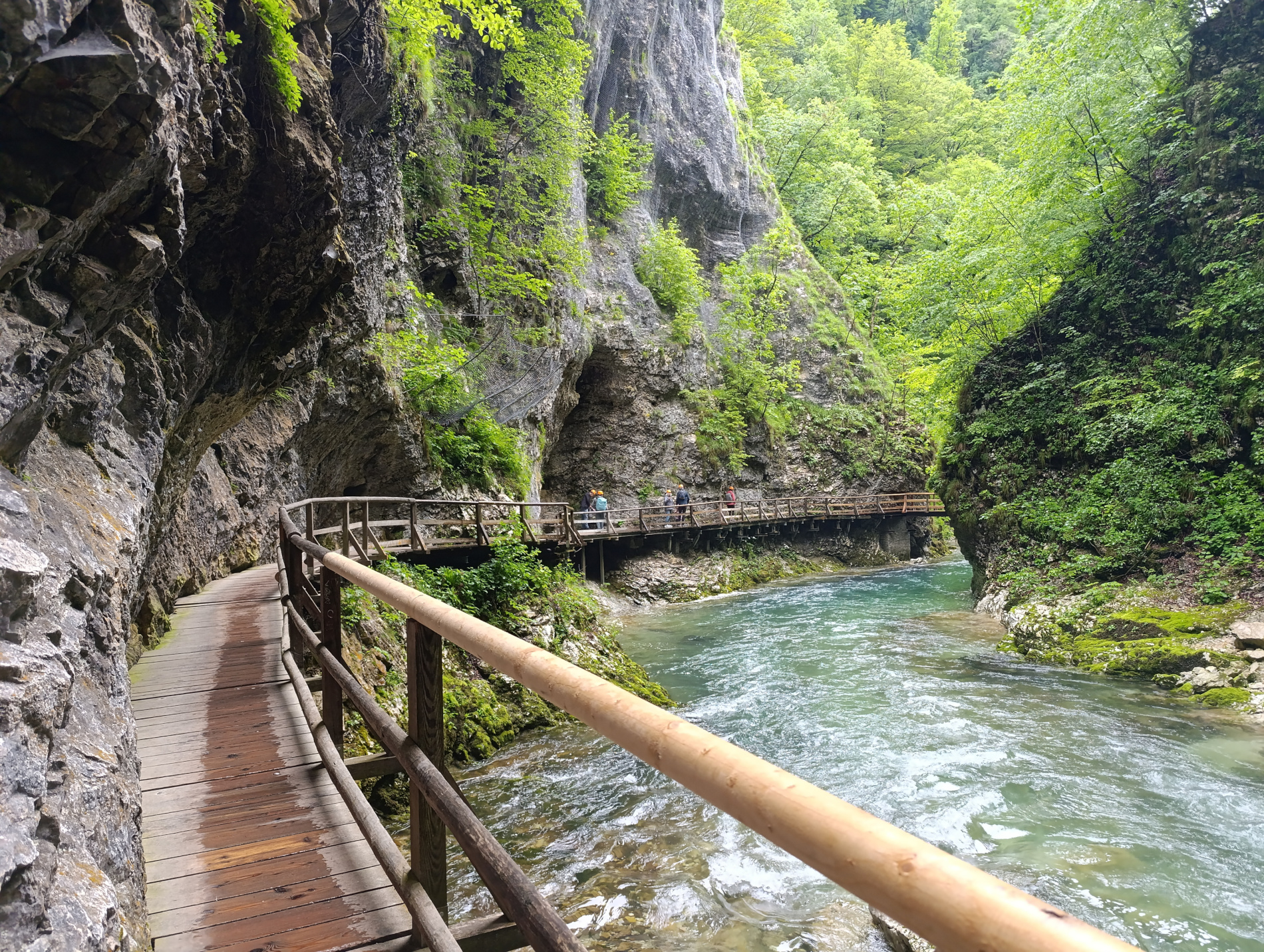
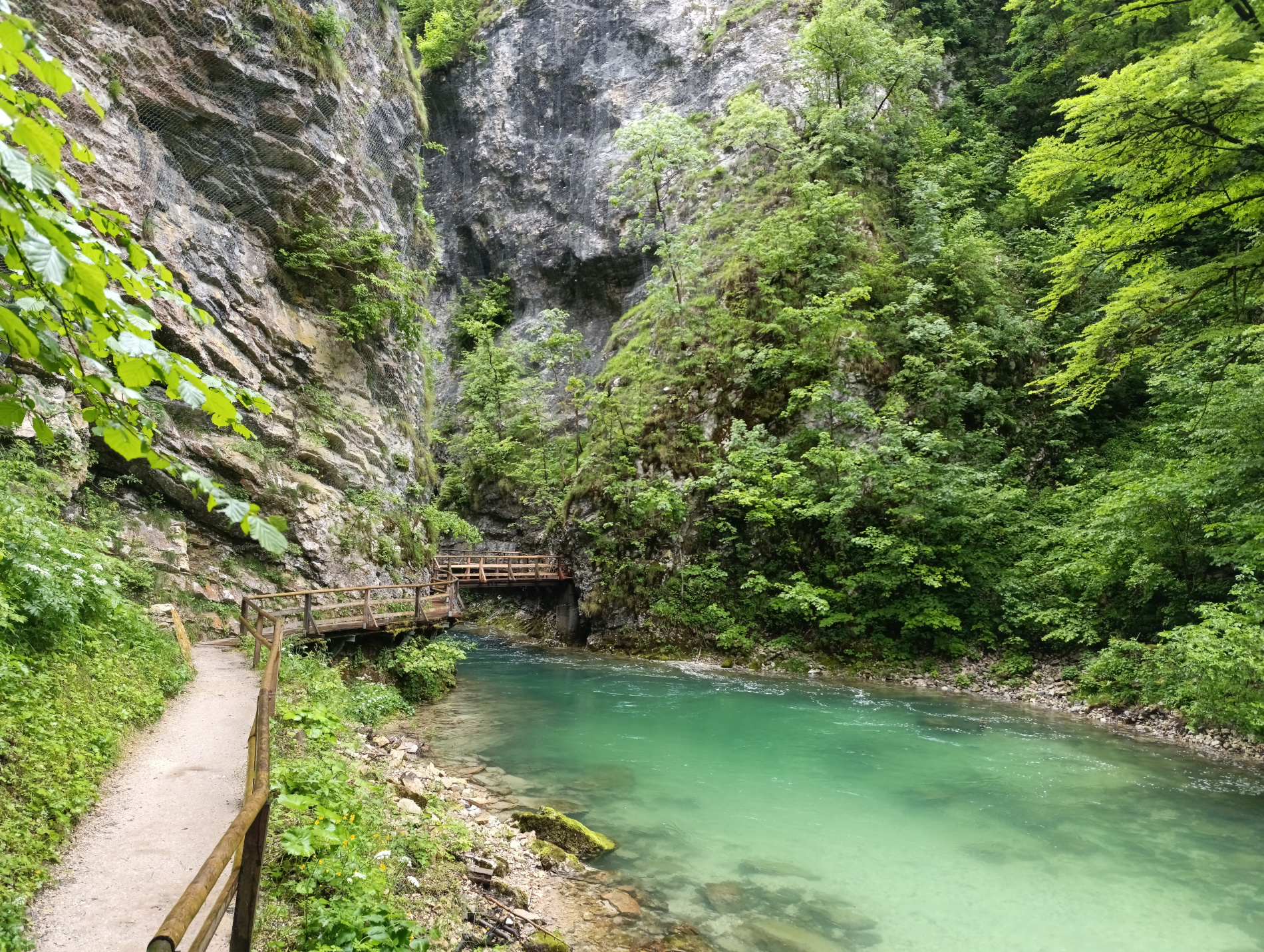
I recommend that you take the time to go around the canyon slowly. Nature is beautiful, and there is really no need to rush. All rocks and slopes are secured with strong nets due to regular rock sliding. Through the canyon of Sotjeska flows the river Radovna. The river has an unbelievably beautiful blue-green color. Birds and trees make the surroundings even more attractive, as if you are in a wilderness.
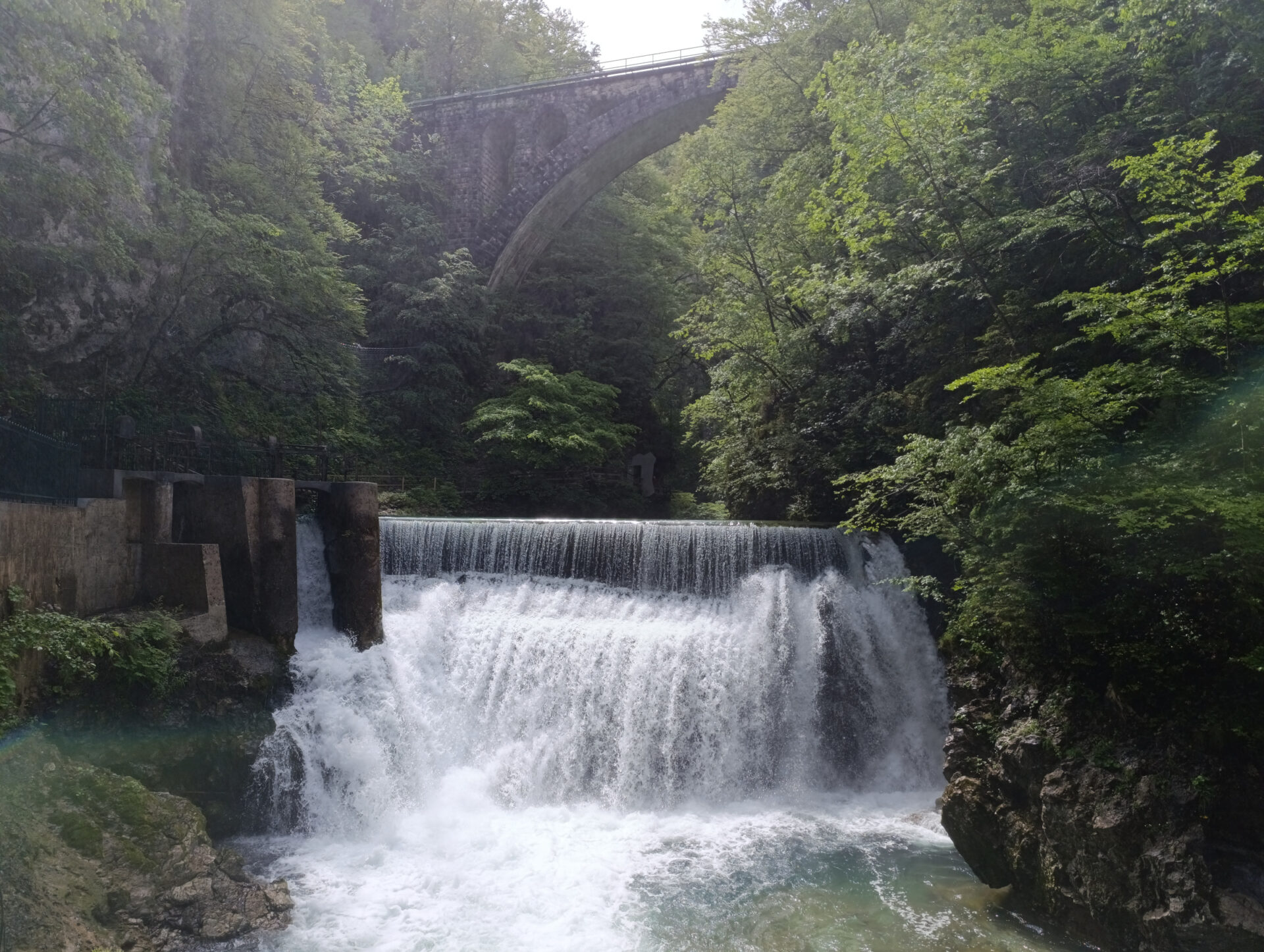
Near the end of the tour, you will come across a beautiful small waterfall that makes the whole visit even more positive. After leaving the canyon, you can rest in a wooden cafe or visit the Sum waterfall. It is necessary to emphasize that the path through the canyon is one-way.
How to get from the canyon end back to the Vintgar Sotjeska entrance
The website states that after leaving the canyon, you can choose two hiking tours. Both paths form a circle leading to the entrance of Vintgara and are well marked. You can choose the King Triglav Trail, which is 5.7 km long in total, or the Tree River Trail, which is 4.3 km long. We have decided not to go on further hiking. Since there is no option on the website to get to the transport from P3 to the entrance of Vintgara, I had to research everything.
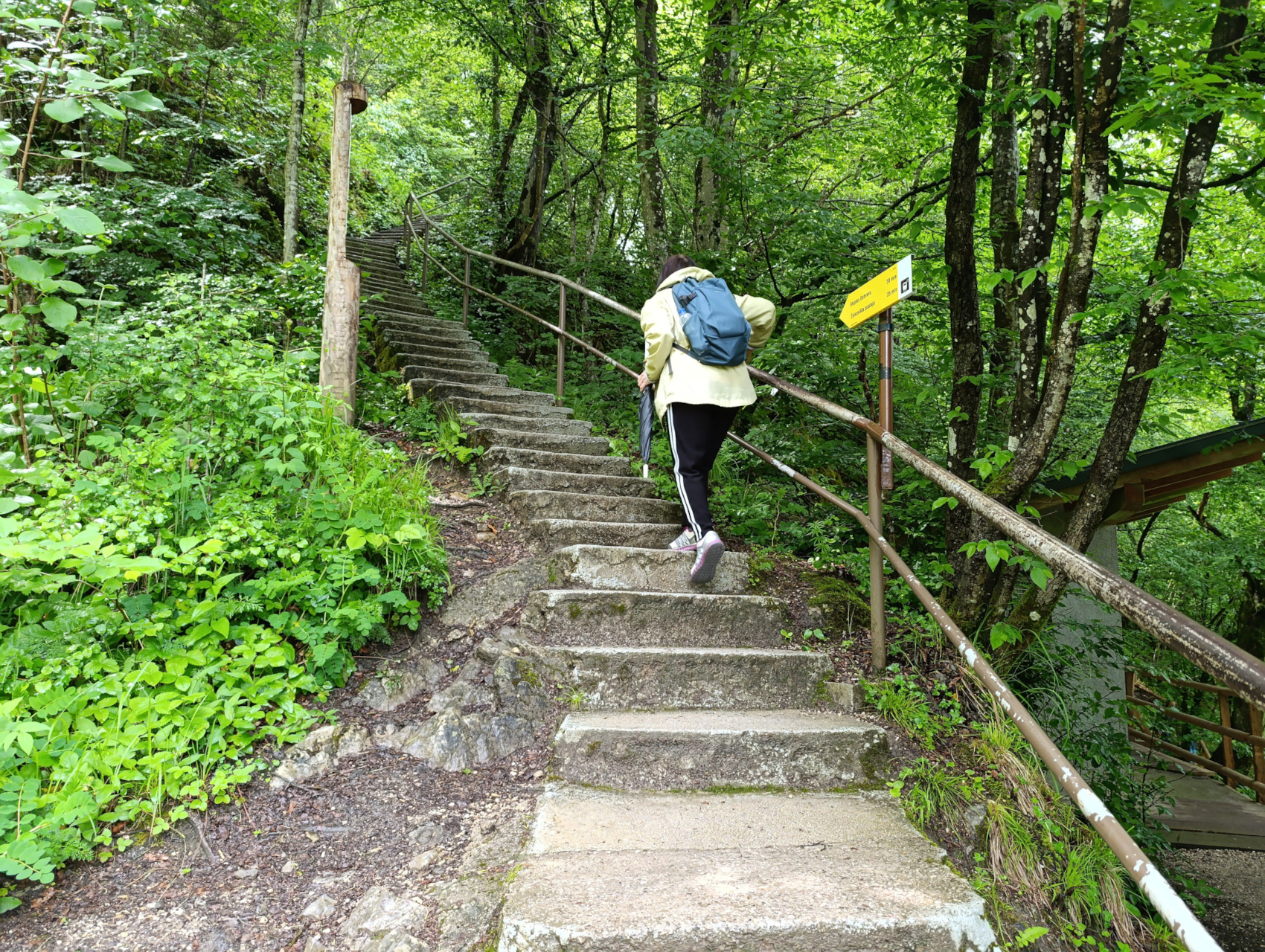
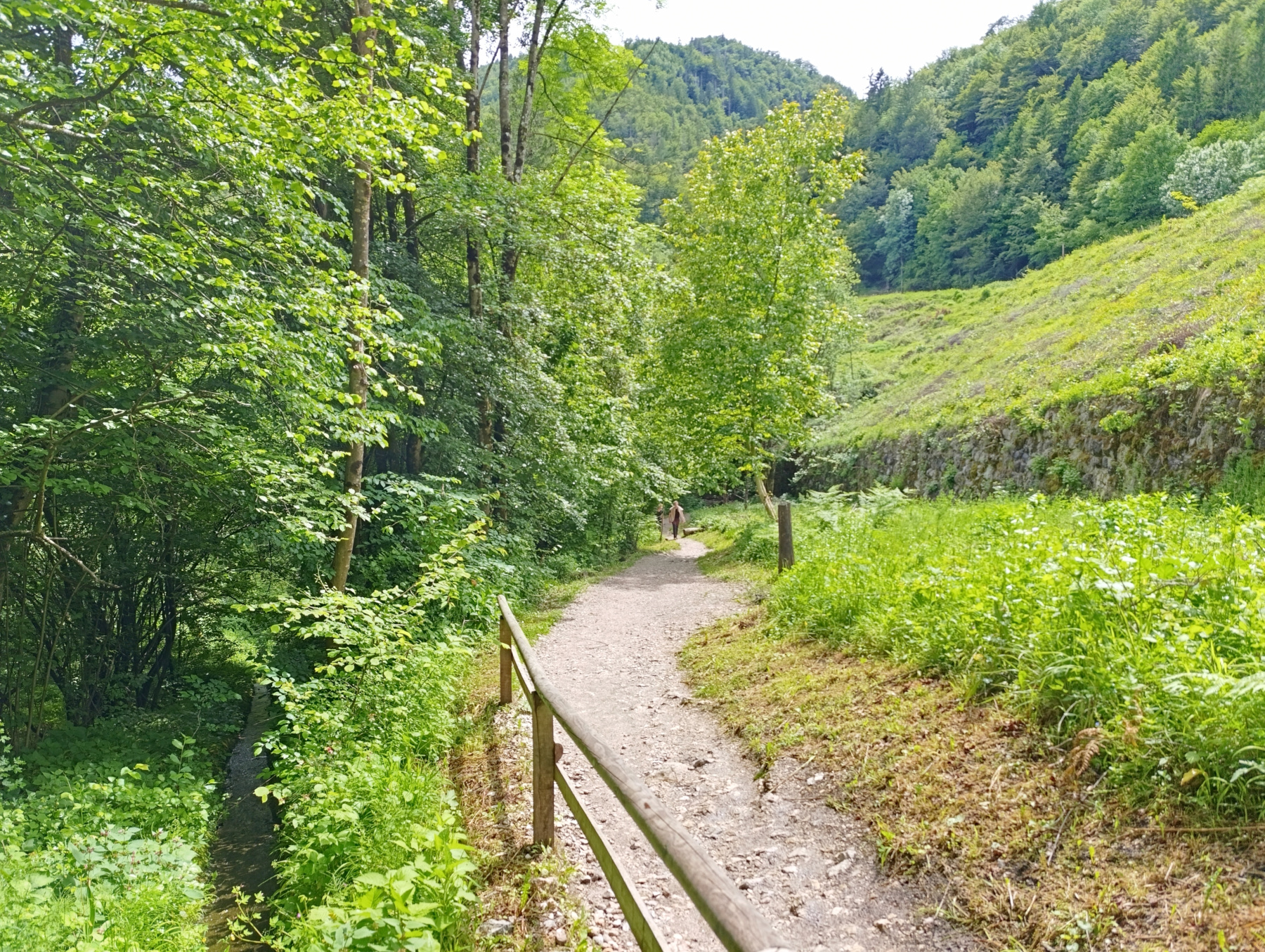
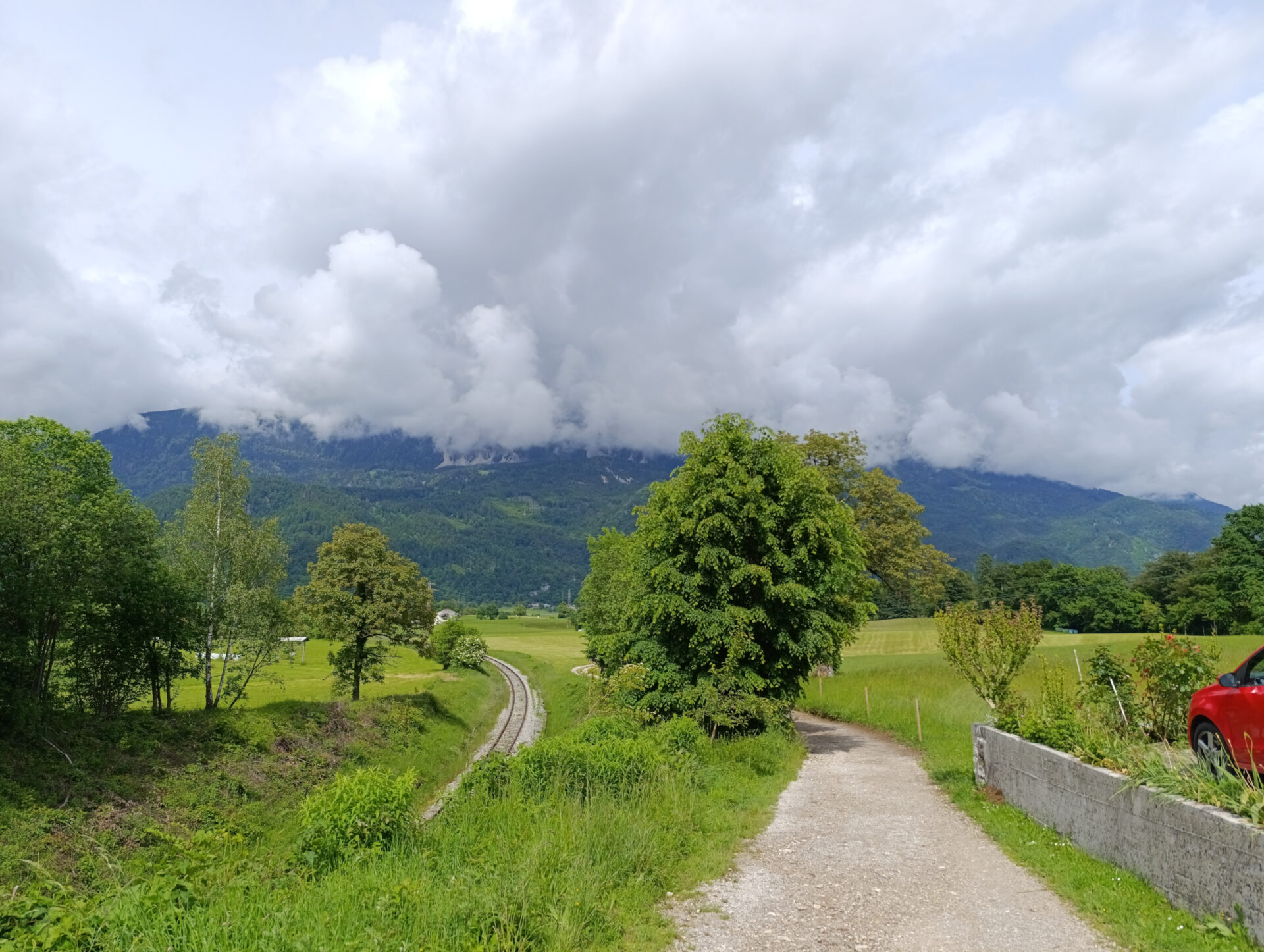
After exiting the canyon, cross the bridge to the left, where you will see a sign for the village of Blejska Dobrava near the stairs. We were told in advance that the path with many steps is tiring. However, the path really goes uphill with stairs, but there is a possibility to rest. The trail is well marked and you can’t get lost if you follow the signs. After the forest, you get on the road and go right on that asphalt road to P3, which is located near the cemetery in Blejska Dobrava. This part of the hike and waiting for the shuttle is outdoors. If you are sensitive to the sun, it is necessary to bring a hat.
You can check the departure time of the bus back to Ljubljana at the main bus station in Bled or on the website.
Kranjska Gora
Kranjska Gora is an alpine village in the northwest of Slovenia, close to the border with Italy and Austria. In addition to being attractive for skiing in the winter, in the summer it attracts mountaineers and nature lovers. Thanks to the proximity of the Triglav National Park and the Julian Alps, you can visit many nature attractions. Kranjska Gora is 2 and a half hours away by bus. In the second part of the bus trip, you have a view of the surrounding mountain peaks.
Kranjska Gora is the starting point for mountaineers and hikers. In the very center, there are cafes, restaurants, and a large store. Everything is close to the main bus station. Nearby, there is a cable car with which you can ride to one of the peaks. Our plan was to take a taxi to Lake Jasna, but there were no taxis. This should be taken into account when you arrive by bus and want to go to some surrounding places.
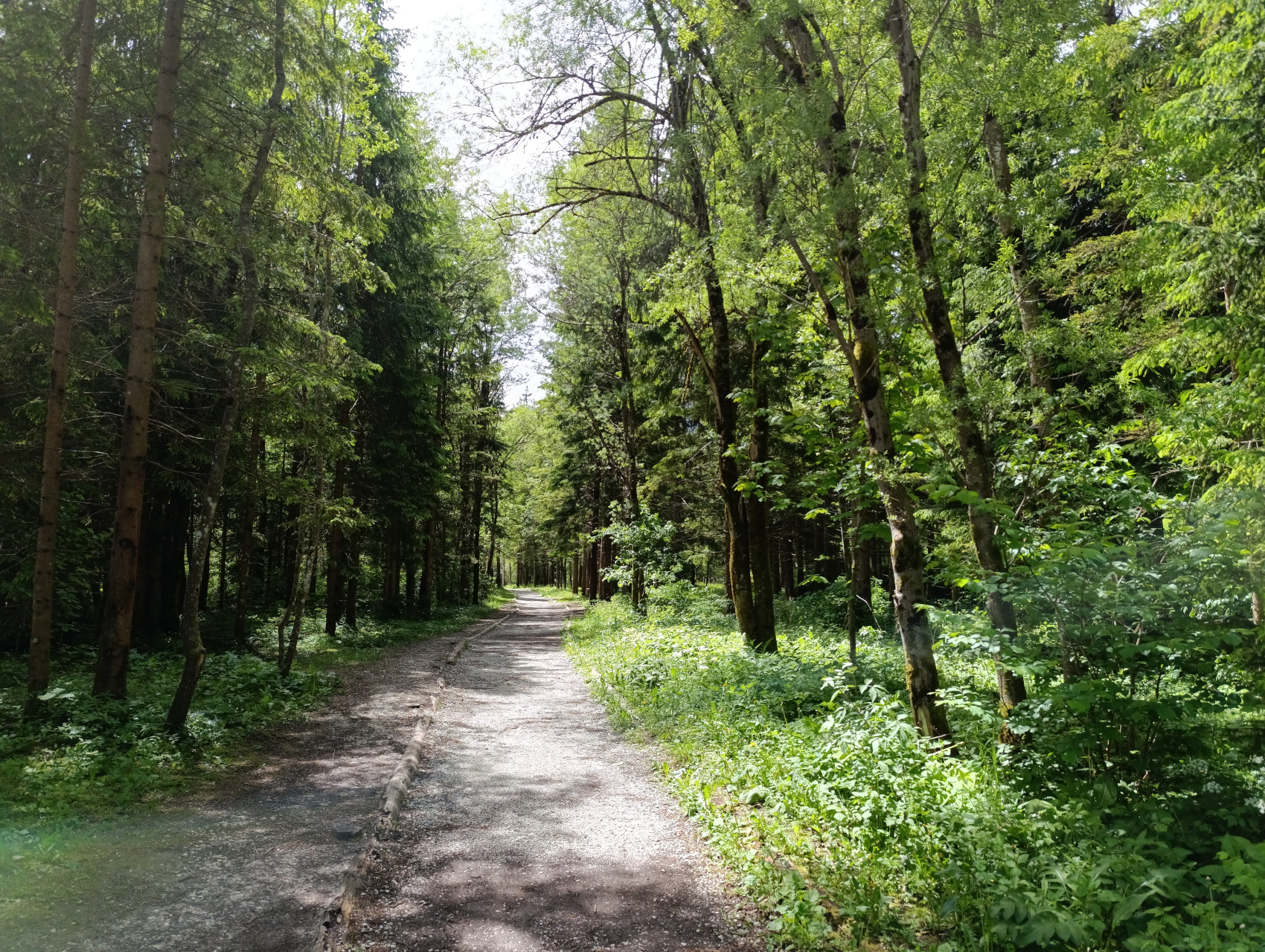
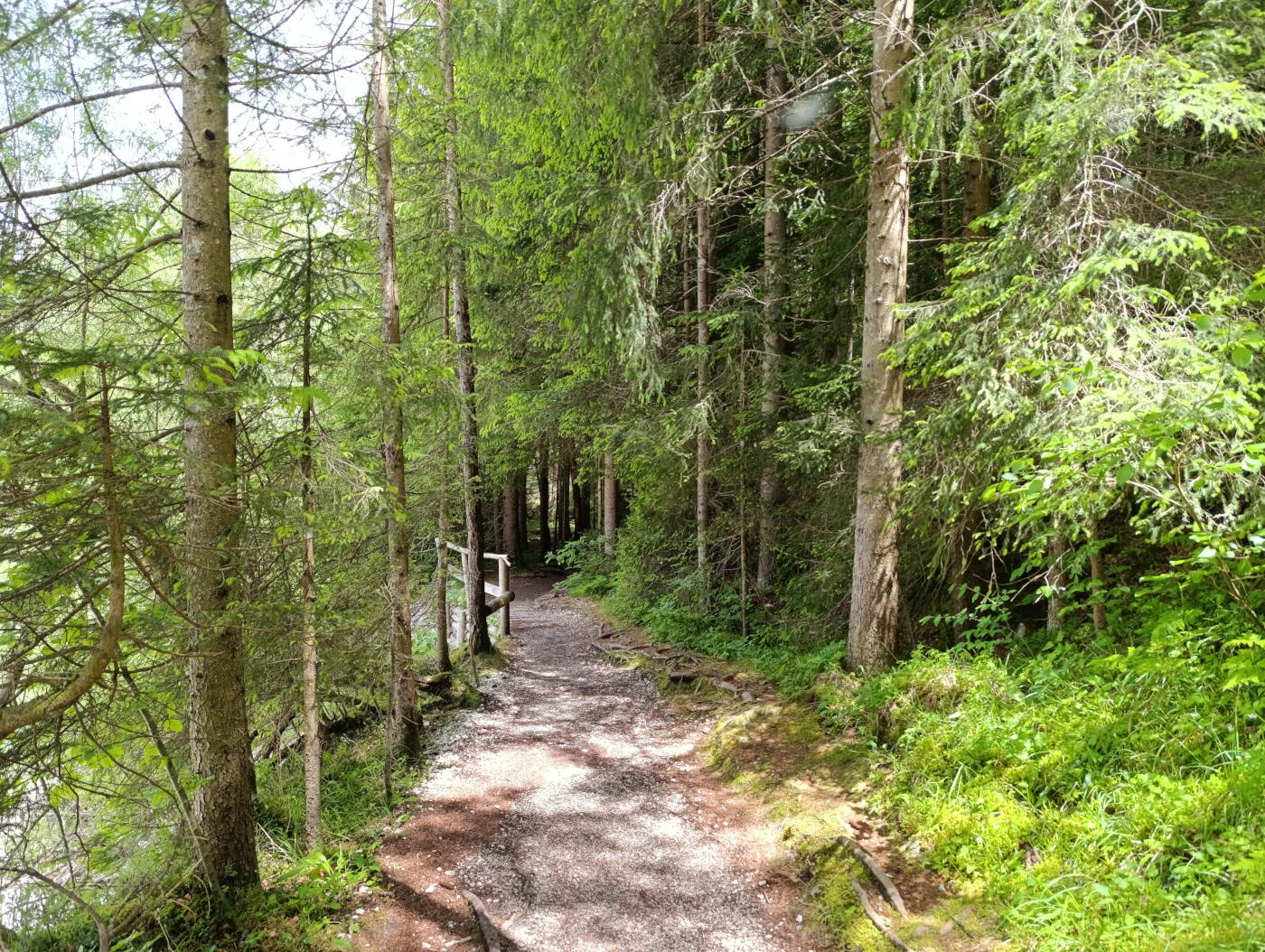
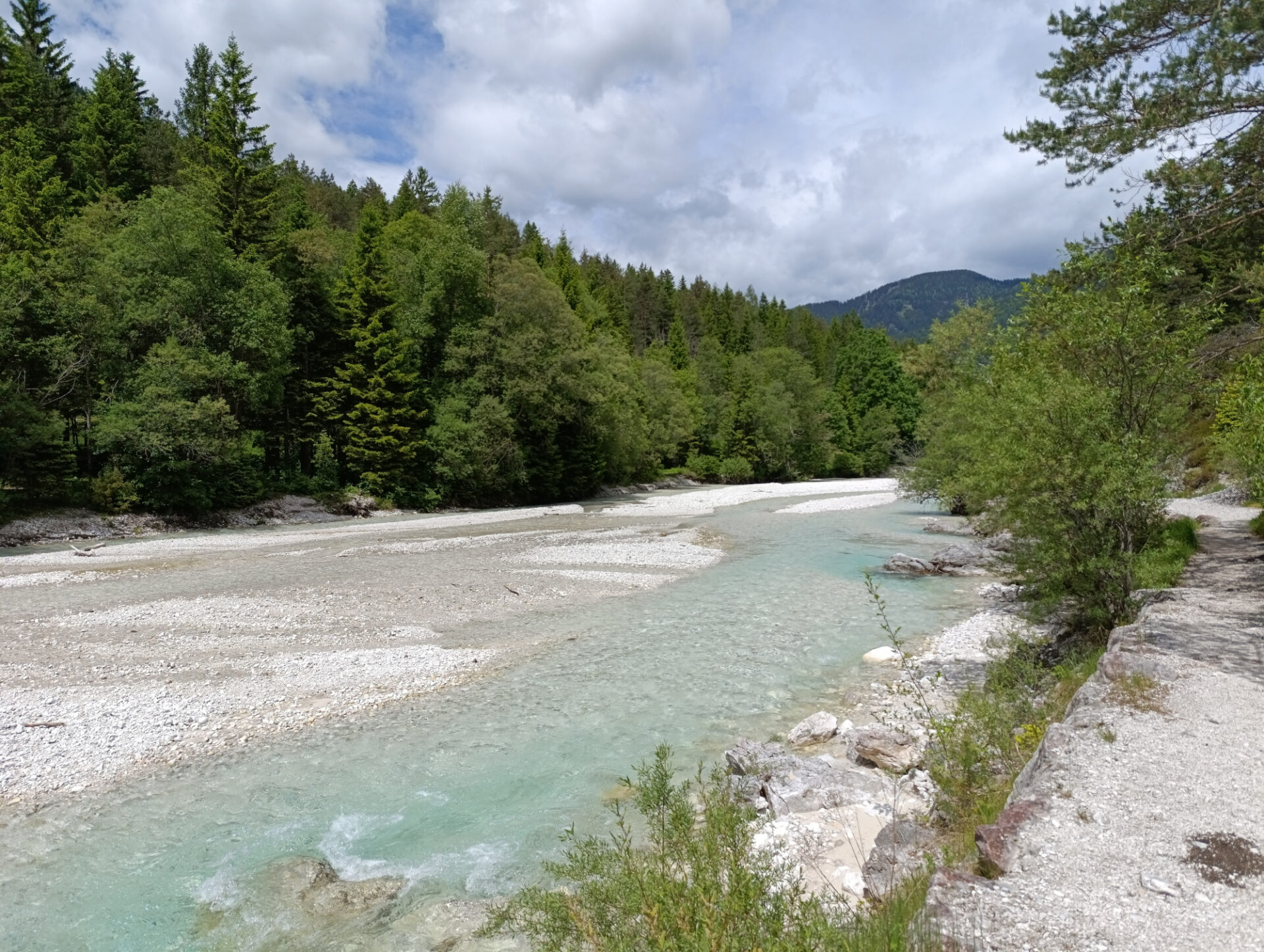
After a short tour of the center, we continued to Lake Jasna. It is about a 2km easy walk to the Jasna Lake. At first, Google Maps showed us that we should go along the highway. We found a better option for walking. Below the highway, there is the river Pisnica, along which you can walk to reach Lake Jasna. As it was warm, the walk through the forest was pleasant. The water of the river Pisnica has a soft blue color and seems unreal. Towards Lake Jasna, you pass by the Kranjske Gora mini hydroelectric power plant.
Lake Jasna
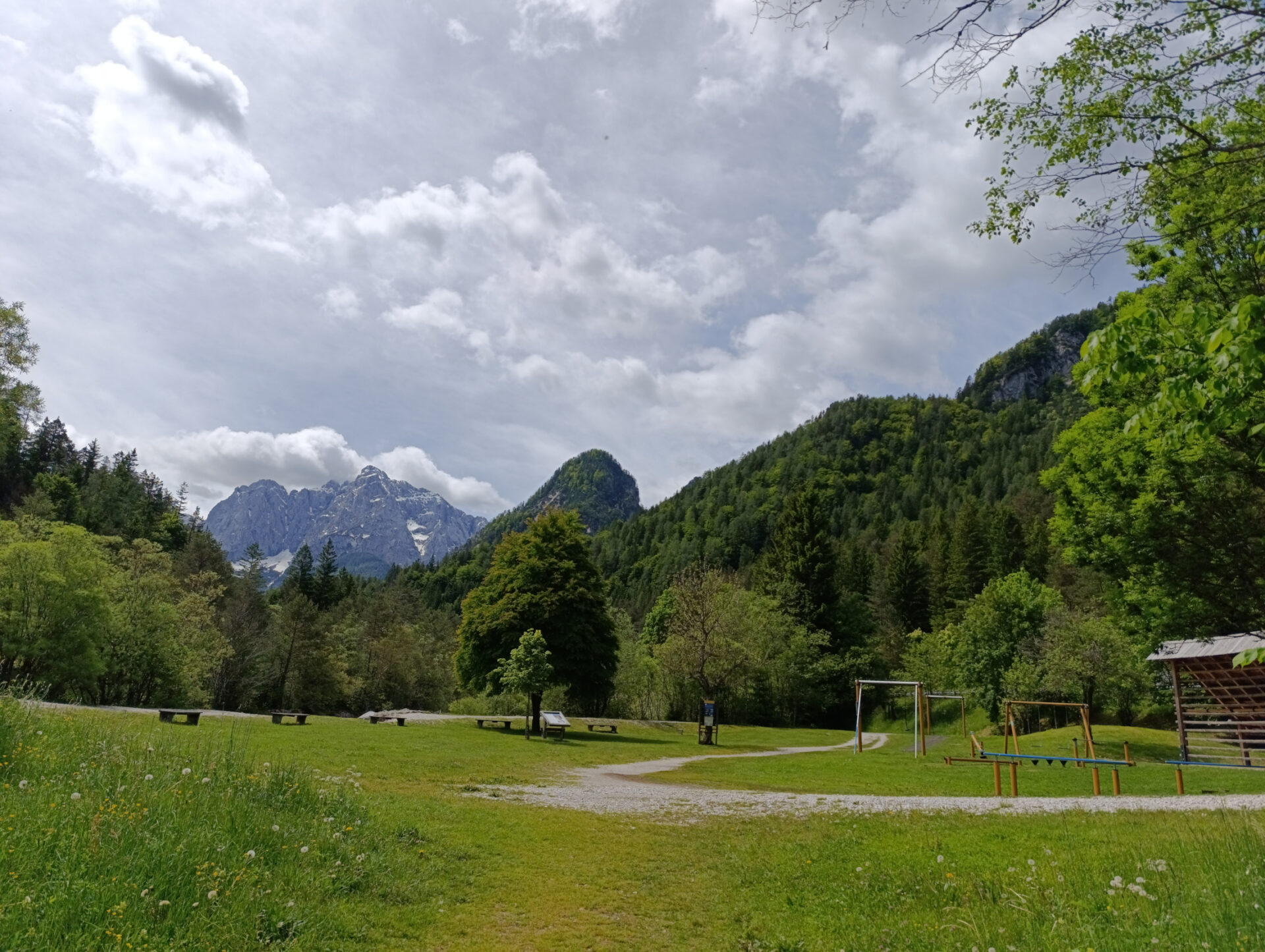
Lake Jasna is the main attraction in this part because of the fantastic landscape for photos, with a view of the peaks. The lake is located at an altitude of 833m, surrounded by the Julian Alps. The path that goes around both lakes is about 1 km and is well maintained.
Near the lake, there is also a suspension bridge over the Pisnica river canyon. The bridge is 16m high and 30m long. It was built in 2021 with the aim of connecting the hiking trail between Kranjska Gora and the area of Lake Jasna.
There is a wooden frame by the lake with a statue of Vitranc holding a book. Vitranc is a character from the Slovenian children’s literary series Kekec, known for his adventures in the Alps. This is a perfect place for taking photos because the peaks Prisojnik (2601m) and Razor (2547m) are in the background. There is also a statue of an ibex at the entrance to Lake Jasna.
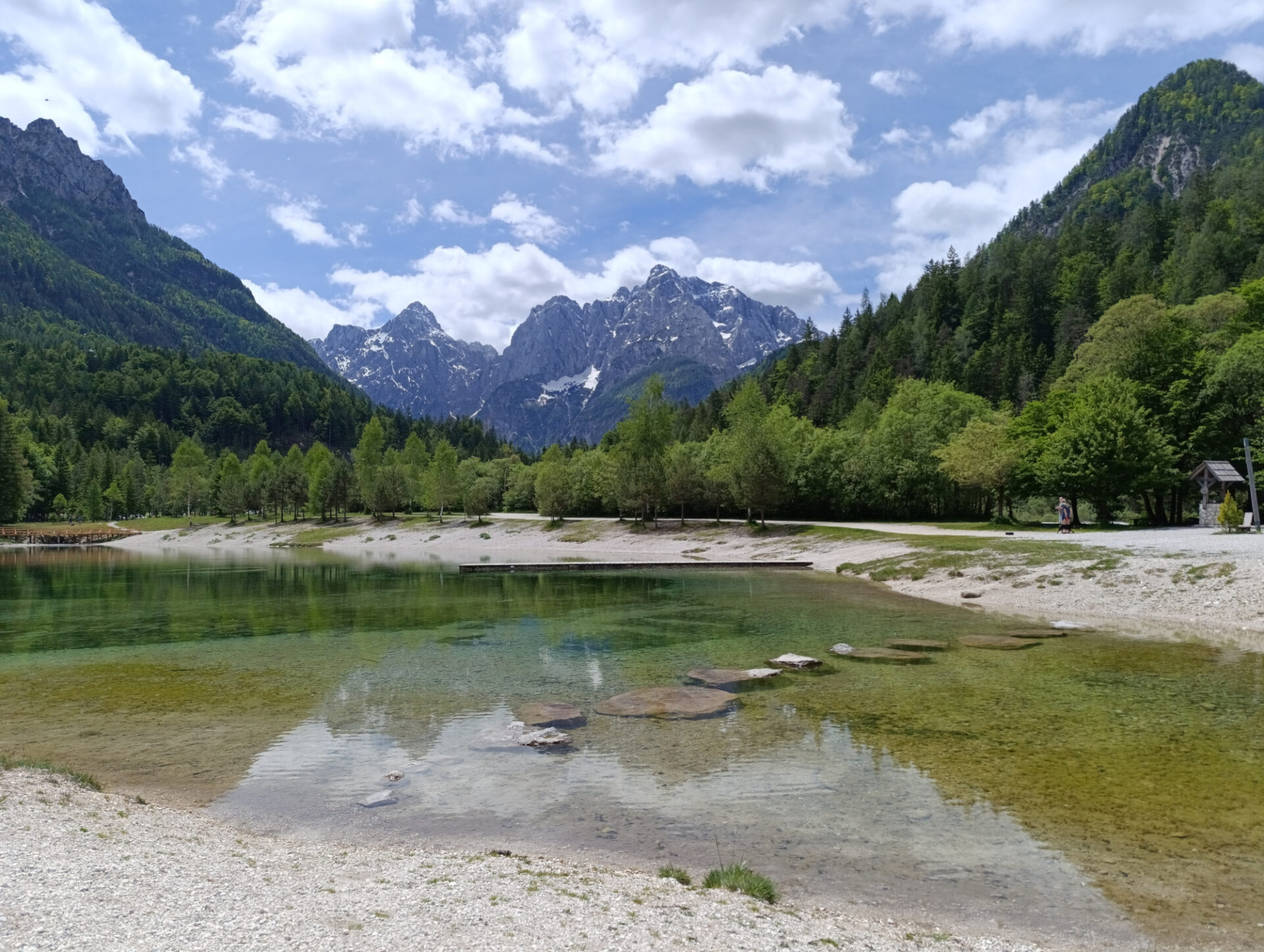
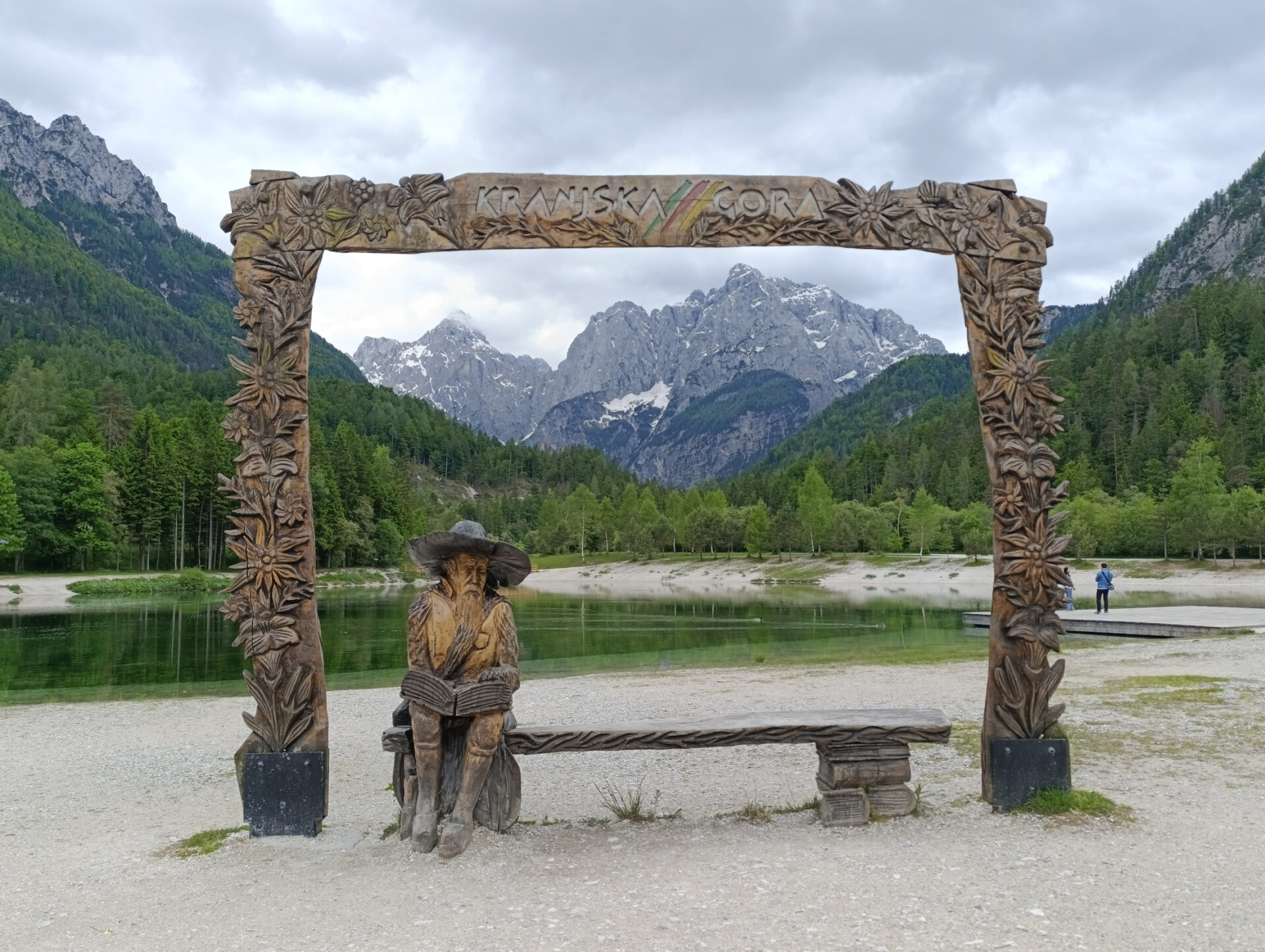
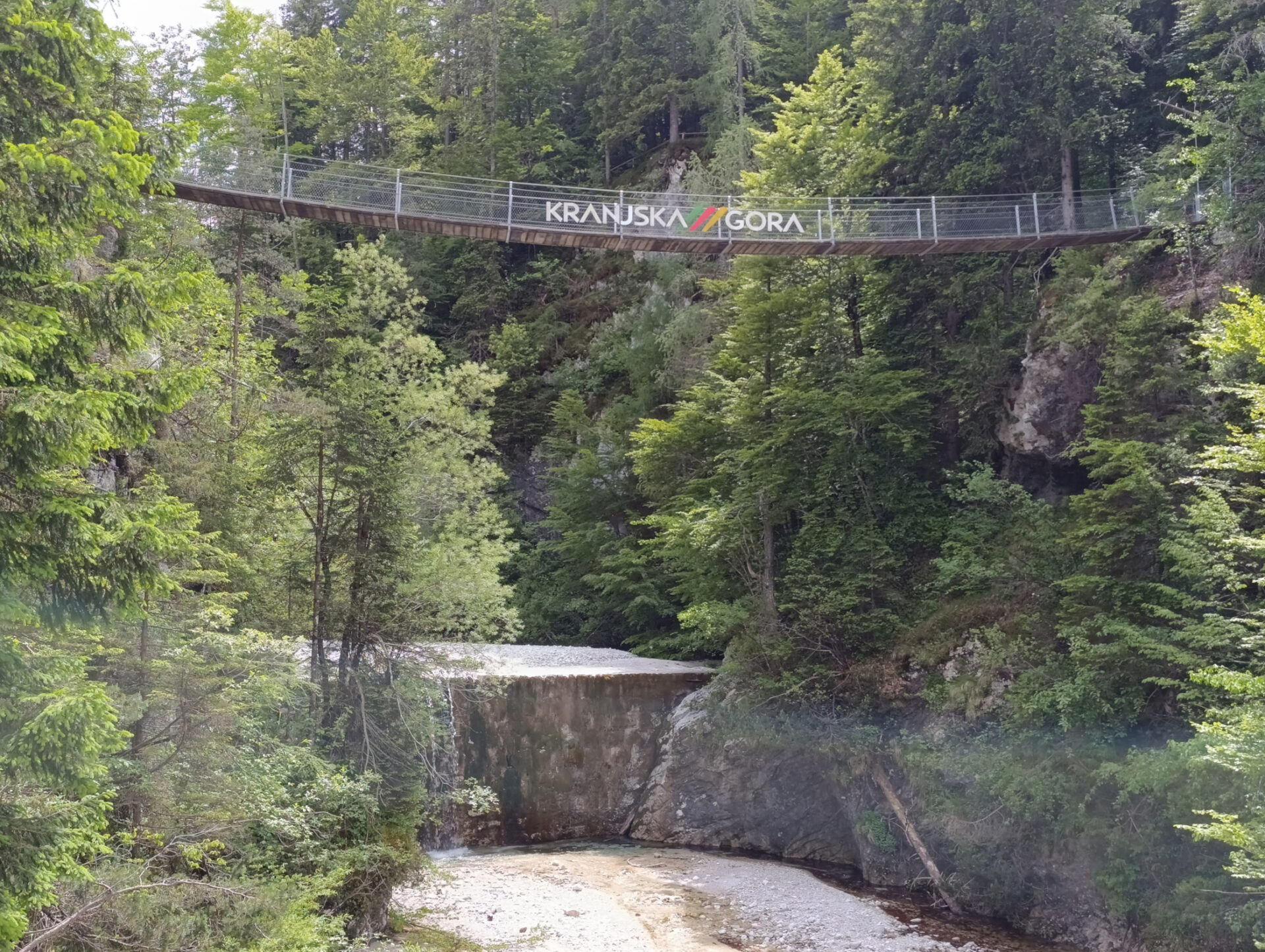
A couple of hours is enough to stay at Lake Jasna. Around the lake, there are many places to sit and enjoy nature. The only minus is that there are not many options for restaurants, so a picnic is a great solution for this place. I took the opportunity to do a short run along the forest path next to the river Pisnica. It is located across the path from the one we used to reach the lake. We headed back to Ljubljana in the afternoon because we had spent enough time there.
Tivoli Park
For the last day of our stay in Ljubljana, we left visiting the nearby attractions. Since Ljubljana is flat, everything can be covered by walking. After leaving the accommodation, we walked to Tivoli Park, which is about 1 km from the center.
This park is the largest in Ljubljana and is characterized by a huge green space and various types of birds. You can visit the summer house of Tivoli Castle. Park has a pond where, in addition to fish, you can also see ducks and geese. There are many benches in the park where you can sit and enjoy nature. At the other end of the park, there is a sports hall with two indoor sports arenas, a basketball arena, and an ice hockey arena.
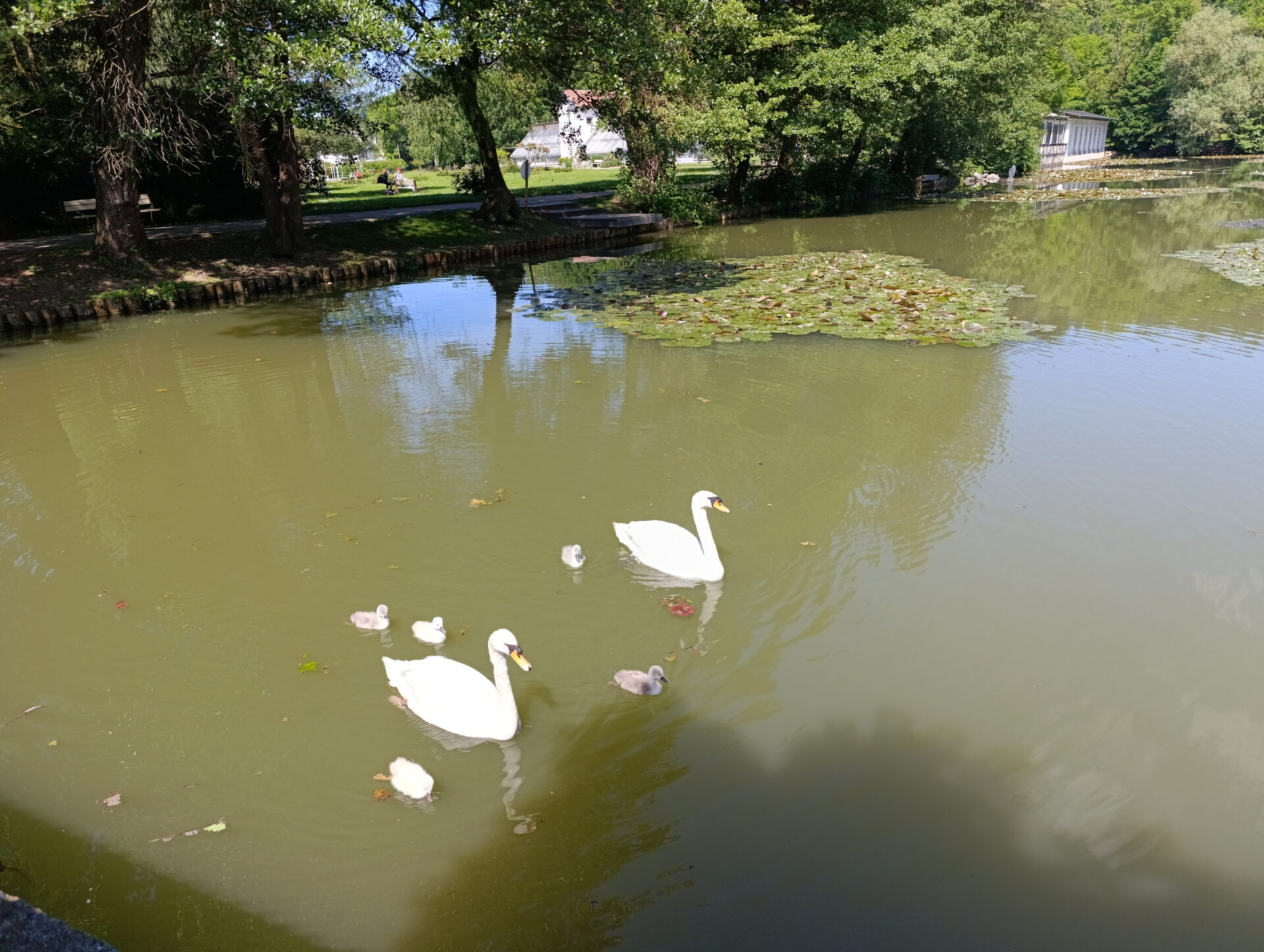
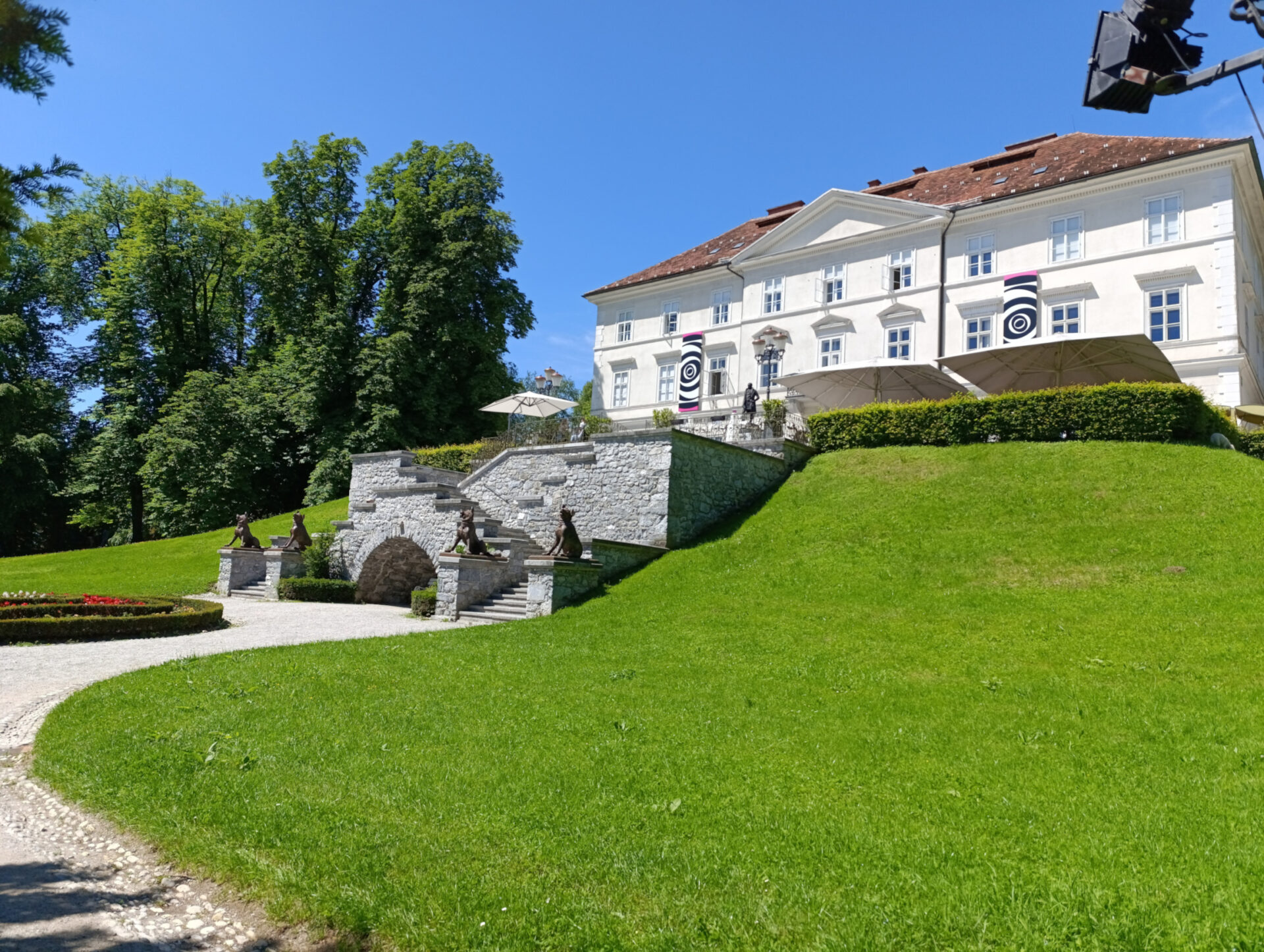
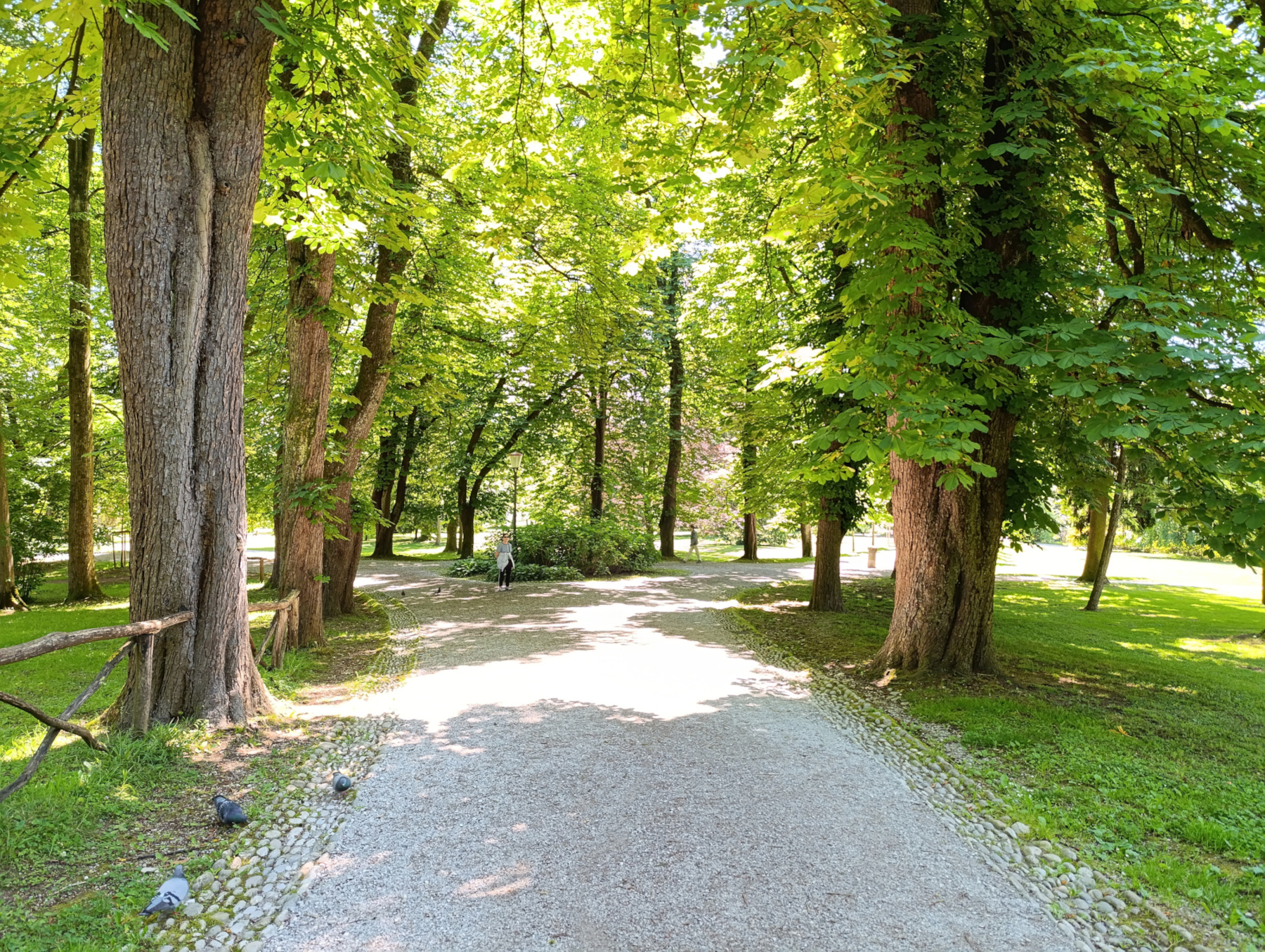
During our visit to Tivoli Park, there was an orienteering race for school children, which was a suprise for me.
Ljubljana Center
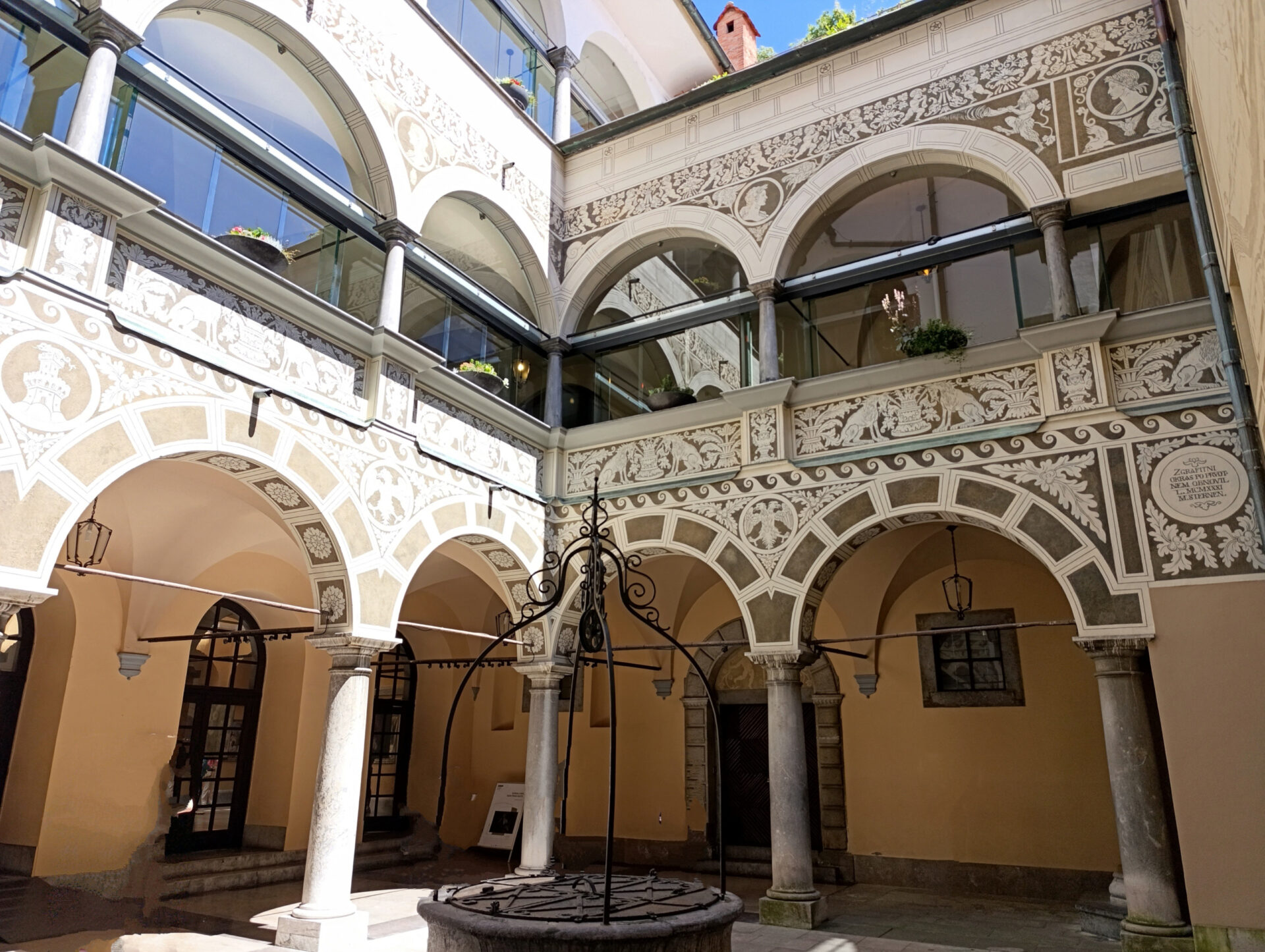
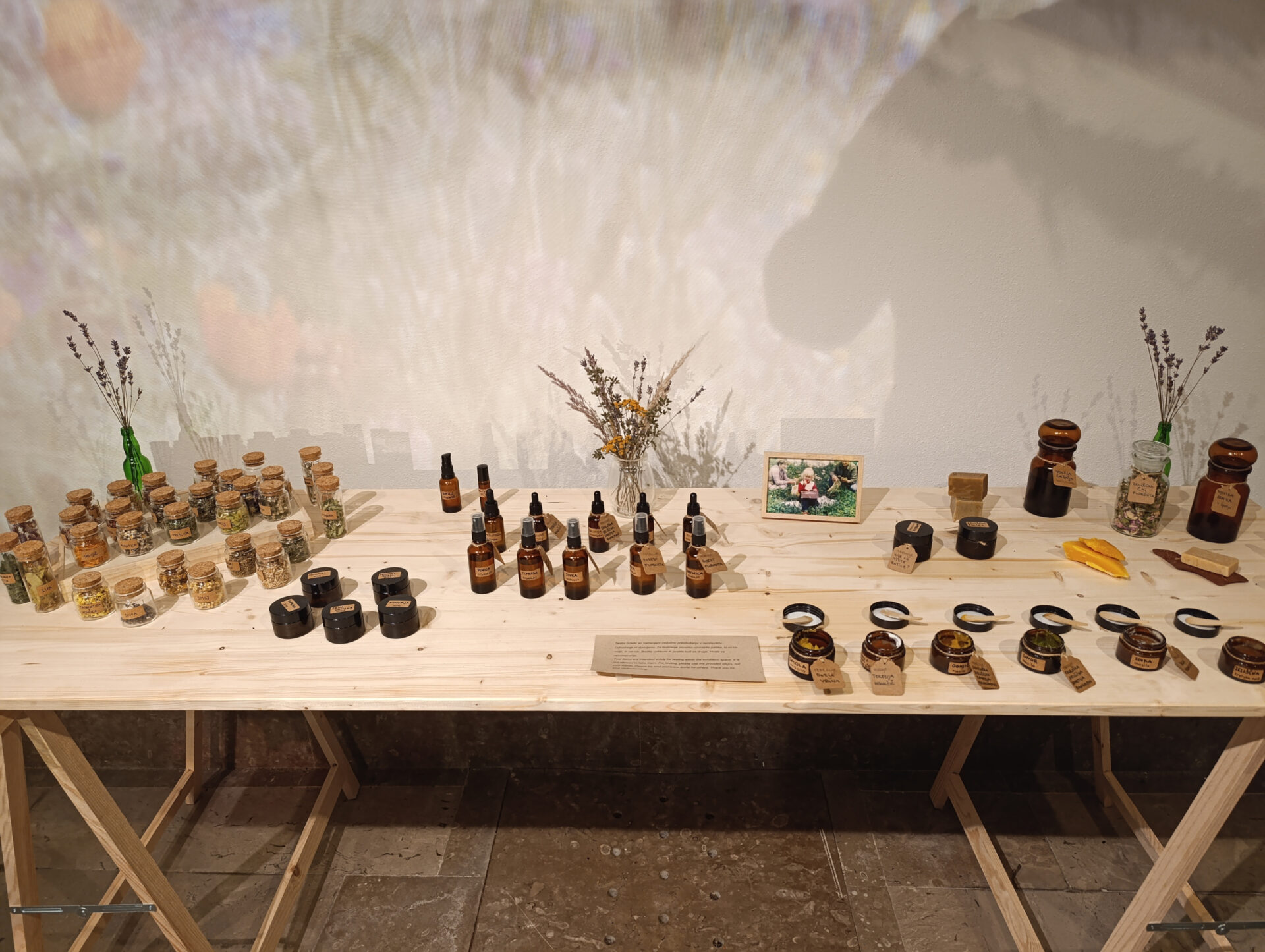
After Tivoli Park, we visited the Town Hall. At that moment, there was an exhibition of pictures of herbalists and medicinal plants. The most interesting for me was the table with samples of serums, herbs, and herbal ointments. Inside the Town Hall, walls with interesting architectural and design solutions can be seen.
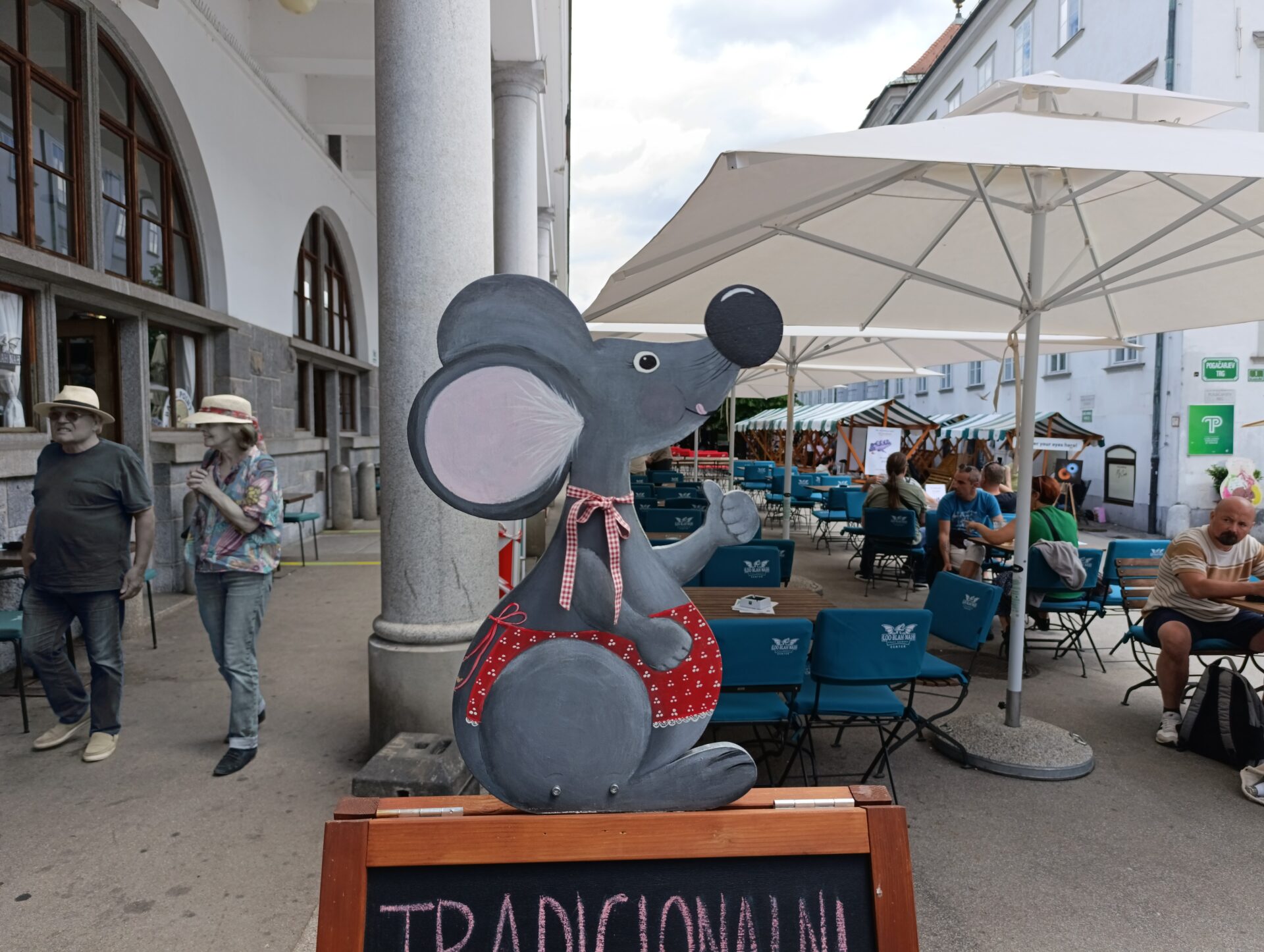
After several hours of hiking, we stopped at Moji Struklji for coffee and strudel. In most places in Ljubljana, you can pay by card, and the prices are affordable. If you are a fan of shopping, a visit to BTC City is recommended. BTC City is like a mini city with many brands of different products. I read the recommendation on the Internet, but due to a lack of time, we were unable to visit.
As a conclusion
Ljubljana as a city reminds me a lot of Novi Sad in Serbia. For that reason, I was not surprised by the architecture and the city itself. Nature and a good connection with those locations are something that I found interesting. As for people and culture, they are as diverse as everywhere. They know the Serbian language very well. What surprised me was also the younger generation that knows Serbian. If you are a fan of being in nature, it is worth visiting Ljubljana and then embarking on the adventure of touring the true Slovenian beauty of the Julian Alps.